
Family owned & operated · 30 years in Columbus restoration.
Water Damage Restoration Columbus — 30 Years, 60-Minute Dispatch
Water damage restoration is the whole job after a leak or flood: pumping out standing water, finding hidden moisture with meters and thermal imaging, drying the structure, and documenting it all for your insurance claim. iDry Columbus dispatches in 60 minutes and answers 24/7, from a team with 30 years of Columbus restoration experience.

Columbus's water damage restoration team. Serving Clintonville, Upper Arlington, Westerville, Dublin, Worthington, Hilliard, and all of Franklin County for 30 years. Call 614-810-0000 — we dispatch in 60 minutes.
Water Damage Restoration in Columbus at a Glance
- What it is
- Getting the water out, drying the structure until meter readings show it's dry, and removing what can't be saved, after a burst pipe, appliance leak, sewage backup, storm or flooded basement.
- First call
- Call 614-810-0000, answered 24/7. Shut off the water if you can, and take photos before you move anything.
- Water category
- Clean (Category 1), gray (Category 2) or grossly contaminated (Category 3, such as sewage or flood water). The category decides what gets dried in place and what comes out.
- How long
- Extraction comes first. Structural drying usually takes 3–5 days, longer for hardwood, subfloor and finished basements.
- When drying ends
- When moisture readings show the materials are dry, not when they look dry. Dry wood framing reads under 16% moisture content.
- Mold risk
- Mold can start growing on wet drywall, carpet pad and framing within 24–48 hours.
- Cost
- Set by how much water there was, how long it sat, the water category and the materials it reached. See cost and insurance below.
- Insurance
- Sudden, accidental damage is often covered. Flooding and groundwater usually need separate flood coverage. See how claims work.
- Who runs the job
- Every job runs under owner Curtis Teets's direct oversight, from the first call to the final dry-out.
- Service area
- Columbus and all of Franklin County, including Clintonville, Upper Arlington, Westerville, Dublin, Worthington and Hilliard.
- Free inspection
- Request one online, or ask when you call.
Why 60 Minutes Changes Everything
After water damage hits your Columbus home, every minute counts. Mold begins developing in 24–48 hours per EPA guidance. The first 60 minutes determine whether this is a manageable cleanup or a full-scale remediation project.
Time before mold begins in water-saturated Columbus home. iDry's 60-minute dispatch closes the window before it opens.
Standing water spreads faster than most people expect. Water from a burst pipe, appliance failure, or sewage backup doesn't stay put. It wicks into drywall, saturates subfloor, and reaches structural framing within hours. The damage you can see on the floor is only a fraction of the total moisture.
Columbus homes are built on clay soil. Clay doesn't drain — it holds water against your foundation. When water damage happens inside your home and moisture reaches the foundation walls, the clay outside compounds the problem. Basements stay wet longer in Columbus than in cities built on sandy or loamy soil.
The mold timeline is non-negotiable. Mold needs three things: moisture, a food source, and time. Every Columbus home provides the first two — drywall, framing, and carpet backing are organic materials. The only variable you control is time. Calling right away gives your home the best chance of drying before mold starts. Calling 3 days later means you need mold remediation on top of water restoration.
Types of Water Damage We Handle in Columbus
Copper and galvanized pipes in Columbus homes built 1920s–1980s fail most often in winter below 20°F. Supply lines release up to 8 gallons per minute.
Sewer line failures and combined sewer overflows during heavy Columbus rain push contaminated water into basements. Category 3 damage requiring specialized cleanup.
Sump pump failures, foundation cracks, and Columbus clay soil create the conditions for basement flooding. The most common water damage scenario we respond to.
Water heaters, washing machines, dishwashers, and refrigerator ice makers cause water damage in every era of Columbus housing. Slow leaks are often worse than sudden failures.
Severe thunderstorms, ice dams, and wind-driven rain cause roof leaks, window failures, and exterior water intrusion. Spring and summer bring the highest volume.
Moisture intrusion in crawl spaces goes undetected for months. Columbus's high water table and clay soil make crawl spaces vulnerable — damage compounds silently.
When you do not need us
Honest answer: a clean-water spill under about ten square feet on a sealed hard surface, wiped up within a few hours, is a towel-and-box-fan job — not a restoration claim. Run a fan and a dehumidifier for 24 hours and watch for cupping or odor.
Call us when any of these is true: drywall, trim, or subfloor got wet; the water came from a drain, sump failure, or outside (Category 2–3); it sat longer than 24 hours; hardwood is cupping; or a finished basement is involved. Those are the jobs where waiting multiplies the cost. Flood safety basics: ready.gov/floods.
How iDry Restores Water-Damaged Columbus Homes
Six steps. Same day. Every job documented for your insurance adjuster.
60-Minute Dispatch
Dispatch in 60 minutes. We confirm your Columbus address and dispatch immediately. Every truck carries full extraction and drying equipment — no waiting for a second crew.
Water Extraction
Industrial-grade extraction. Industrial pumps and truck-mounted extractors remove standing water. We protect your belongings while we work. Every gallon removed now means less drying time and lower mold risk.
Thermal Imaging Assessment
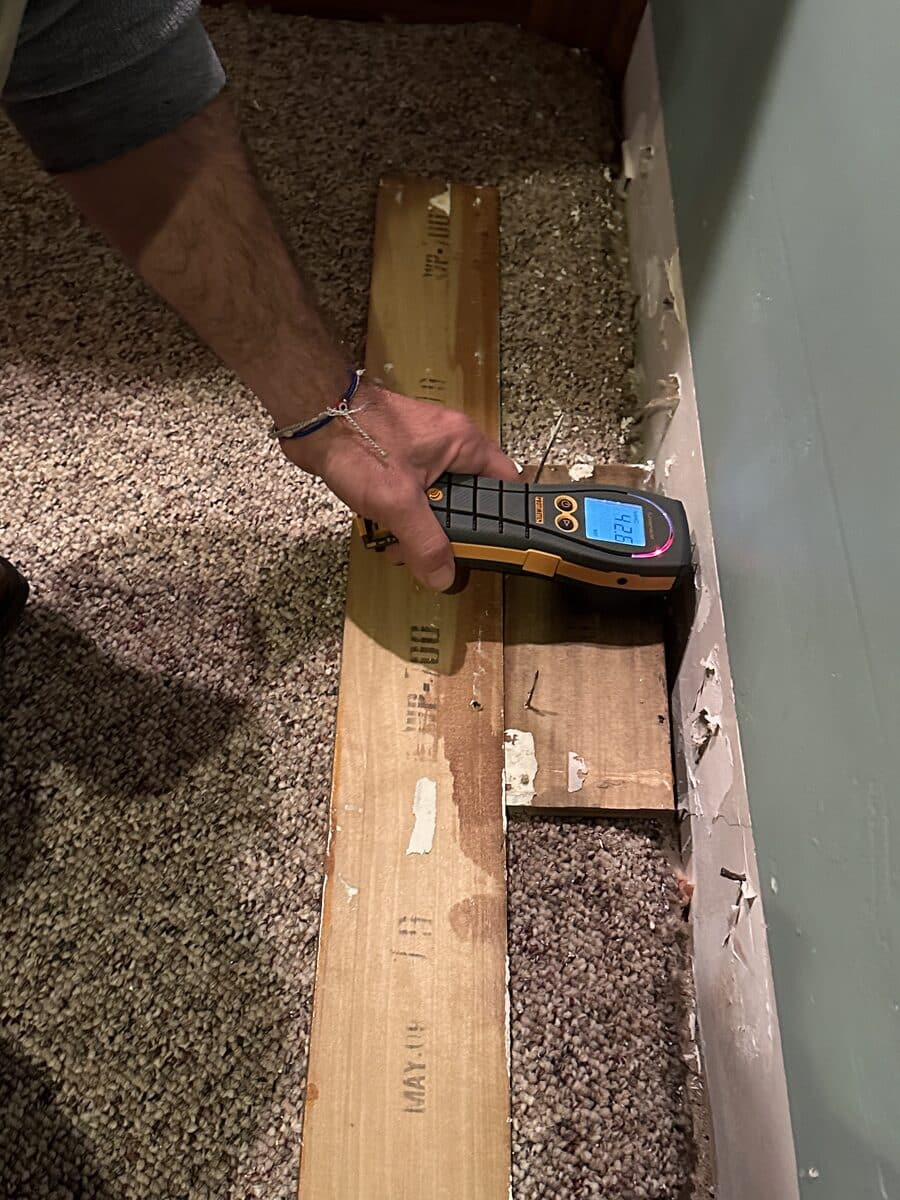
Thermal imaging maps hidden moisture. Thermal cameras and calibrated moisture meters map hidden moisture inside walls, ceilings, and under floors. We don't guess where the water went — we verify it. Full water extraction targets every affected area.
Structural Drying
Continuous structural drying. Industrial air movers and Phoenix dehumidifiers drive moisture out of drywall, framing, and subfloor. This takes 3–5 days depending on scope. Equipment gets adjusted daily based on moisture readings.
Daily Monitoring
Daily verification. A technician returns every 24 hours to take moisture readings. We don't declare the job done until readings confirm the dry standard — not when it looks dry.
Documentation & Prevention
Complete documentation package. Photos, moisture logs, and scope of work go to your insurance adjuster. Antimicrobial treatment where warranted. We coordinate with your contractor if structural repairs are needed.
Average drying time for water damage in Columbus homes with professional equipment. Daily monitoring confirms when the dry standard is met.
The process, in six steps
- Call and dispatch. Phones answered 24/7; a crew is dispatched the moment you call with extraction and drying gear loaded.
- Assessment and moisture mapping. Thermal imaging and pin meters map everything wet, including moisture you cannot see inside walls and subfloor.
- Water extraction. Truck-mounted pumps remove standing water; extraction is the cheapest gallon you will ever pay for — every gallon left raises drying time and cost.
- Controlled removal. Only materials that cannot be dried come out — wet pad, swollen MDF, drywall past the wick line. Everything removed is photographed for your claim.
- Structural drying, days 1–4. Air movers and dehumidifiers run continuously with daily metered readings until wood is under 16% moisture content and indoor humidity holds below 60%.
- Verification and documentation. Final moisture map, drying logs, and photos go into one file for your adjuster.
What Water Damage Restoration Costs in Columbus
Cost depends on scope — how much water released, how long it sat, and what materials it reached. Homeowners insurance often covers water damage from sudden, accidental events, and the final call is always your insurer's. iDry documents the damage and the work from the first visit, in a form you can hand your adjuster. Call us at 614-810-0000 — we help you understand your coverage situation when we arrive.
Minor
$1,500–$4,000+
Minor scope. Single-room damage, quick response, extraction and drying only. No structural material replacement. Insurance typically covers the full scope.
Moderate
$4,000–$8,000+
Moderate scope. Multi-room damage, subfloor saturation, 3–5 days of drying. May include drywall removal. Most common job size for Columbus water damage calls.
Major
$8,000–$15,000+
Major scope. Multi-floor or delayed-discovery damage, ceiling collapse, structural repair coordination needed. Insurance typically covers sudden and accidental damage.
Ohio homeowners insurance typically covers water damage restoration — extraction, drying, and mold prevention — when the damage was sudden and accidental, not from deferred maintenance.
Waiting multiplies the cost. A water event caught within 60 minutes might cost $2,000 to clean up. The same event discovered 12 hours later can push $8,000 or more. That's before any mold remediation is needed. Speed is the single biggest factor in final cost.
What Insurance Usually Covers
- Water extraction and removal
- Structural drying (equipment + labor)
- Mold prevention treatment
- Damaged drywall and insulation removal
- Content damage caused by the water
What Insurance Usually Doesn't Cover
- Flooding or groundwater (separate flood policy)
- Damage from known, ignored leaks
- Pre-existing damage or deferred maintenance
- Damage caused by lack of home maintenance
What moves the number
| Factor | Effect on cost | Why |
|---|---|---|
| Water category | Cat 3 (sewage) can double a Cat 1 job | Contaminated water forces removal and sanitizing of porous materials that clean water would only dry |
| Time before the call | Damage found after 24+ hours costs 3–5× more | Water keeps wicking upward and mold starts in 24–48 hours, adding remediation to restoration |
| Materials reached | Hardwood and subfloor add the most | Drywall dries or replaces cheaply; cupped hardwood and saturated subfloor mean specialty drying or rebuild |
| Finished vs. unfinished space | Finished basements cost more to restore | Carpet, trim, and built-ins multiply both demolition and rebuild scope |
Plan ahead. See our full water damage cost guide and insurance documentation page for detailed scenarios.
Water Damage Risk by Columbus Neighborhood
1920s–40s homes with galvanized and cast iron pipe. Burst pipes, sewer backups and basement flooding are all common here, especially in winter.
Historic district with original plumbing running through unheated basements. We've worked in German Village for 30 years.
1950s–70s colonials with copper pipe throughout and uninsulated exterior walls. Burst pipe claims spike every January. Basement flooding common during spring thaw.
1970s–90s split-level homes with multiple water entry points. iDry's 60-minute dispatch and documentation standard sets us apart.
1980s–2000s housing with commercial-grade copper supply lines. Columbus clay soil compounds basement flood risk when any water damage occurs.
1950s–70s colonial stock with copper-era plumbing. Similar freeze profile to Upper Arlington.
iDry Columbus also serves Hilliard, New Albany, Sunbury, Gahanna, Blacklick, Pickerington, Canal Winchester, Grove City, Obetz, and surrounding areas throughout Franklin County and Central Ohio.
Recent Water Damage Jobs Near Columbus
Four recent water calls from our job records, newest first: a sump pump failure in November and three emergency calls from late August.
Sump pump failure in Ashley (Delaware County) ·
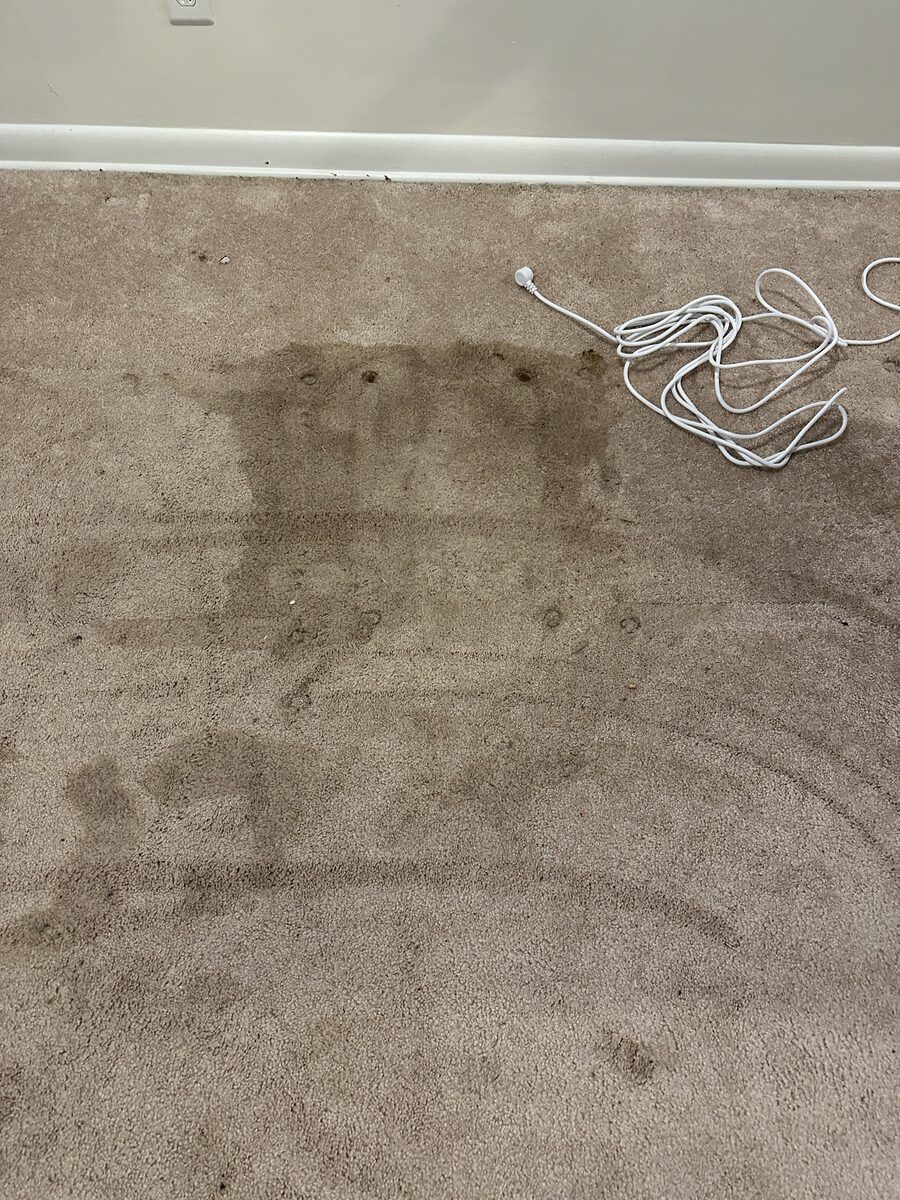
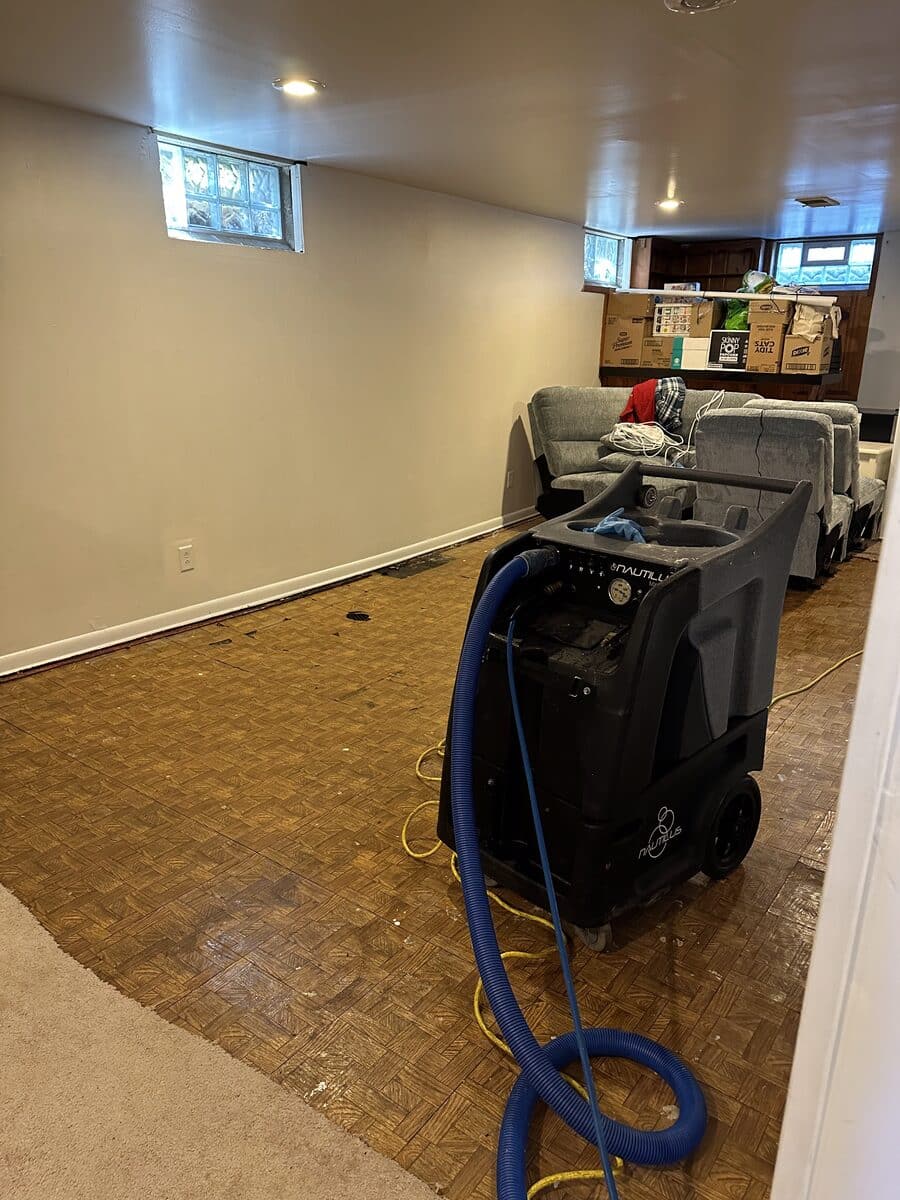
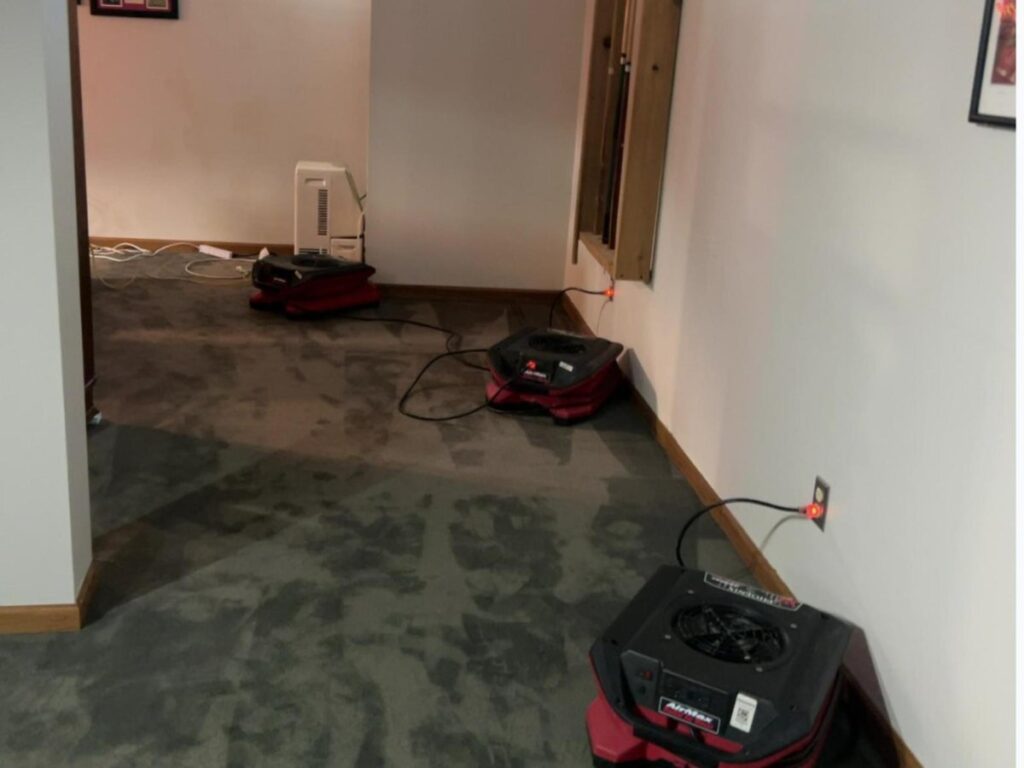
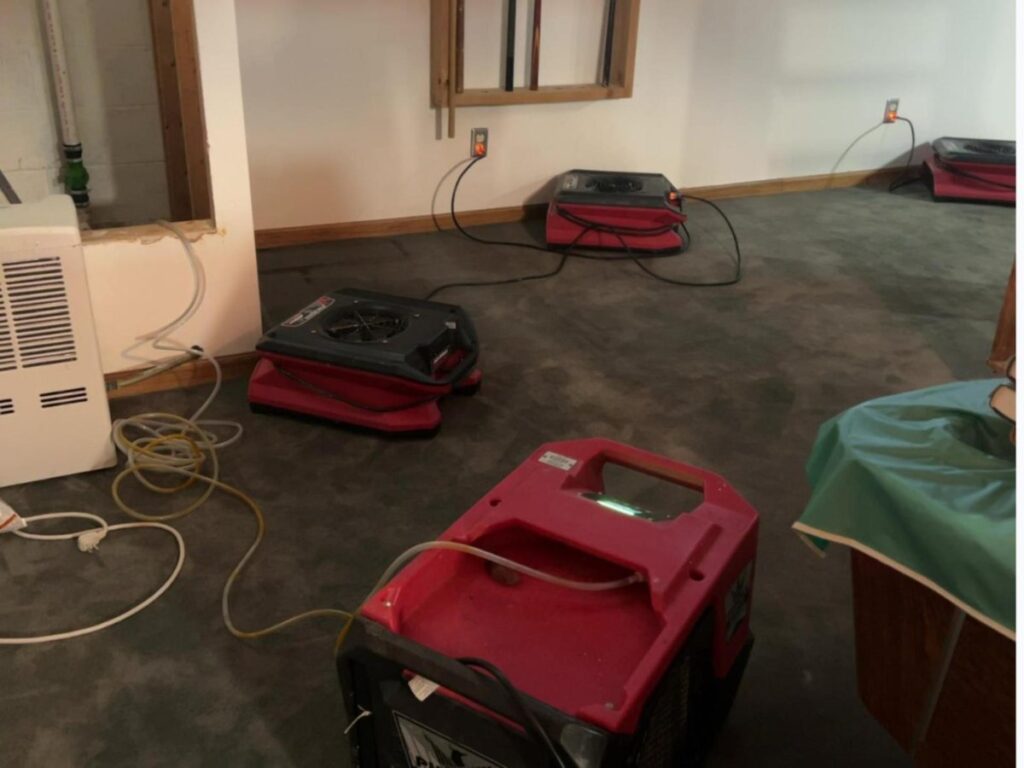
Finished basementWhat we found: The sump pump failed while the homeowner was away, and the carpet in the finished basement was soaked. Furniture, a bookcase and stored belongings were sitting on it. The pump has since been repaired.
What we did: Moved the belongings off the carpet and set the furniture up on blocks, extracted the water with portable extractors, cleaned the affected surfaces and applied antimicrobial where needed, and set up a commercial LGR dehumidifier and air movers to dry the basement. We also cleaned about 650 square feet of carpet.
Creek flooding in Reynoldsburg (43068) ·
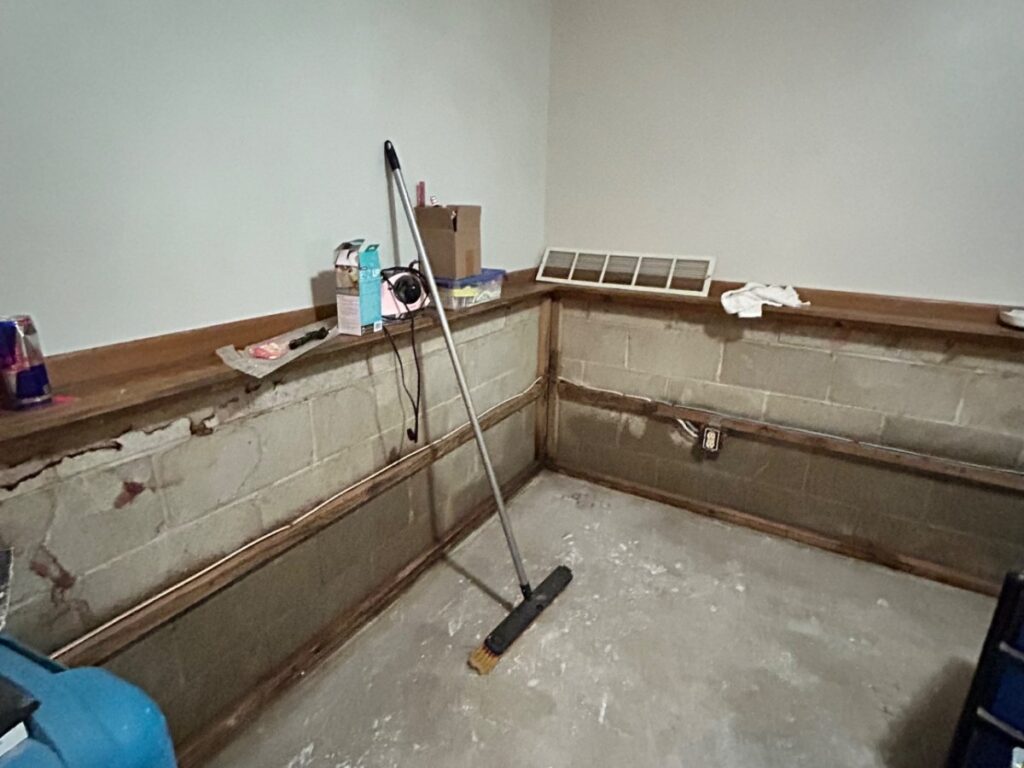
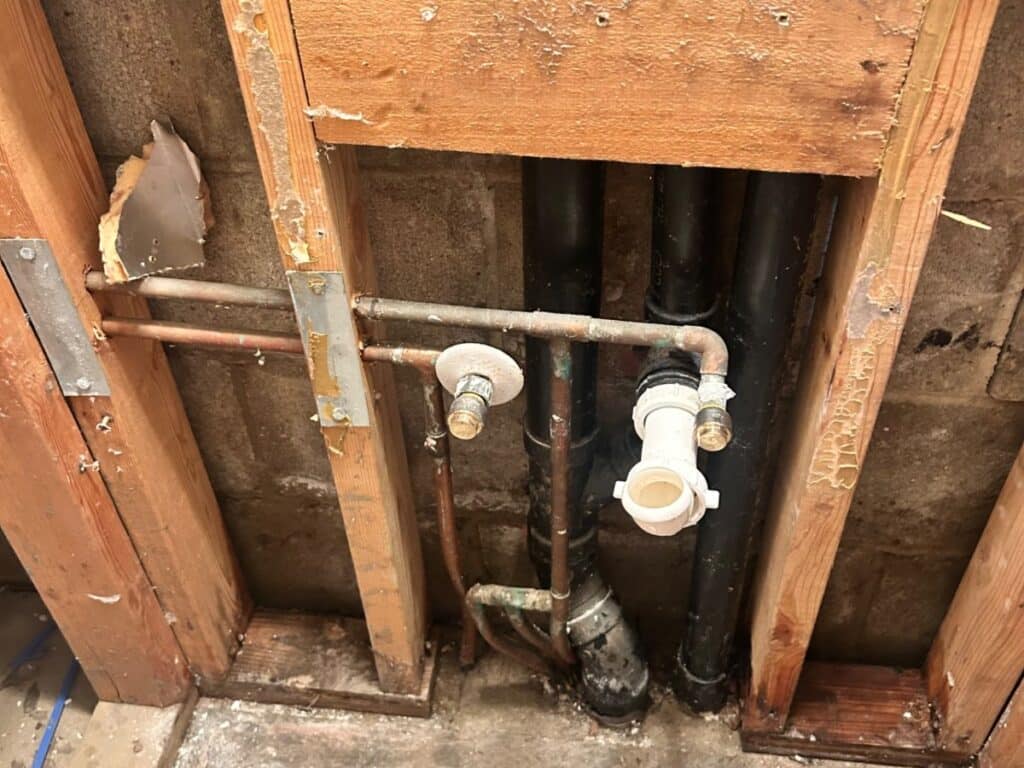
Emergency callWhat we found: A nearby creek flooded the lower level. Most of the standing water was gone and a dehumidifier was already running. Flood water from a creek is Category 3, or grossly contaminated, water under the IICRC S500 standard, so drywall it has soaked is removed instead of being dried in place.
What we did: Cut the drywall out four feet up on the outer and inner walls, removed the trim and other affected materials, and carried the debris out. Then we HEPA-vacuumed the structure and surfaces, applied an EPA-registered antimicrobial, ran HEPA air scrubbers while we cleaned, and set up a commercial LGR dehumidifier and air movers to dry the space.
Sewage backup in Columbus ·
Emergency callWhat we found: Sewage had backed up into the home. The water had since gone down and the area was mostly dry, but the owner was worried about lingering contamination and odor and wanted it professionally cleaned. Sewage is Category 3 water under the IICRC S500 standard, so the surfaces it touched need cleaning and treatment, not just drying.
What we did: Cleaned the concrete floor and lower block walls with hot-water pressure washing and steam, applied an EPA-registered antimicrobial, carried out the debris, and set up a commercial LGR dehumidifier and air movers, which we picked up four days later.
Basement flooding in Columbus ·
Emergency callWhat we found: The basement flooded, with water coming up through the laundry-room floor drain and seeping in through a wall on the far side.
What we did: Mapped the moisture, extracted the water with portable extractors, applied antimicrobial, and set up a commercial LGR dehumidifier and air movers to dry the basement. On a return visit we took meter readings to check the drying.
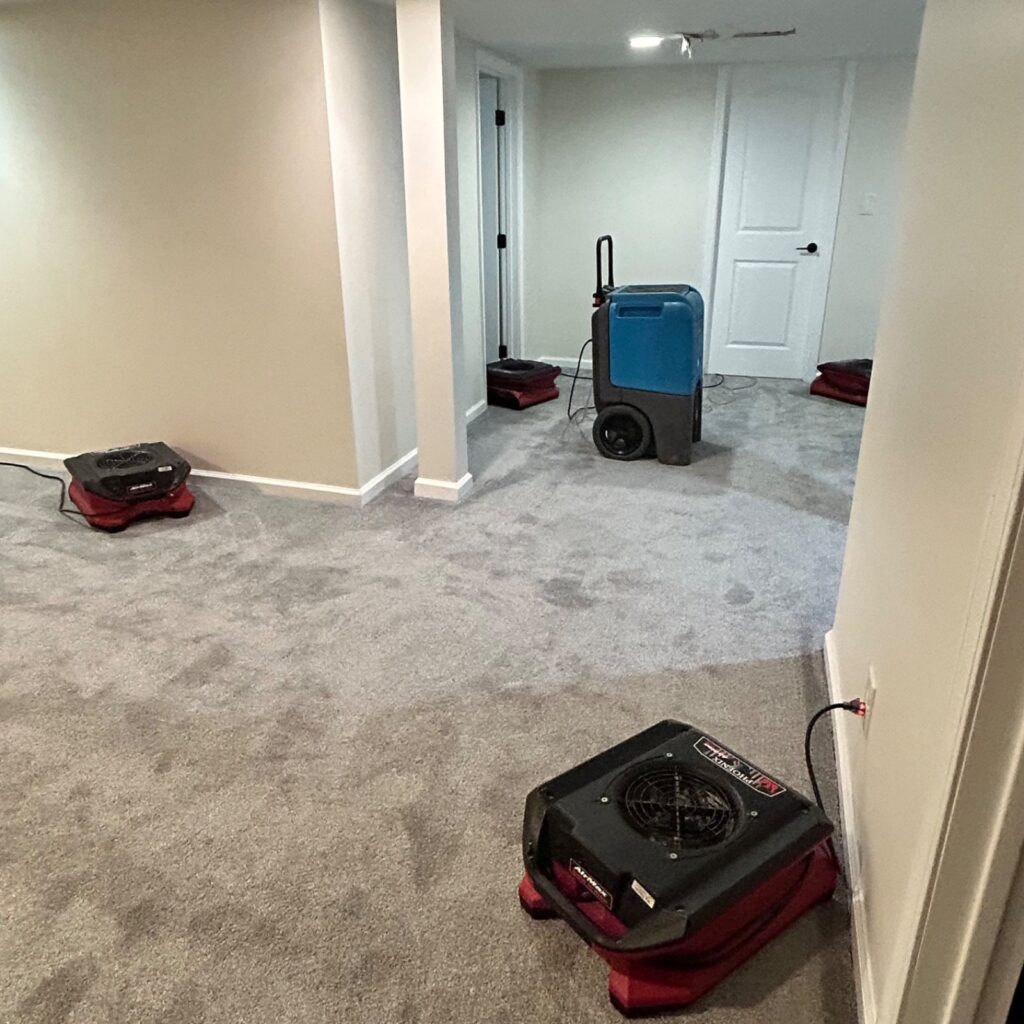
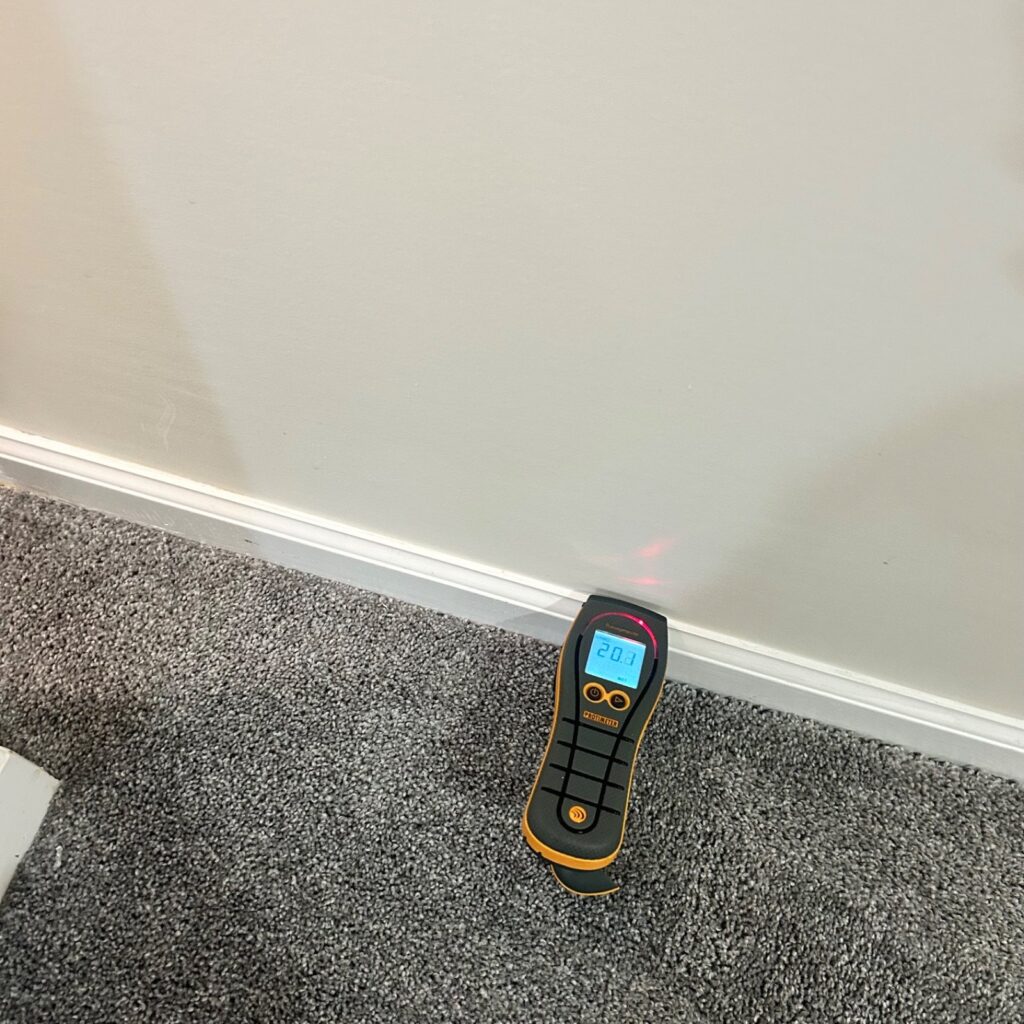
From our own job records, with photos our crew took on site. We list only the city or ZIP code and the month, to protect our customers' privacy.
What Columbus Homeowners Say About iDry
-
Kendra Turner ★★★★★
Curtis and Cathryn were a god send for our family. We found water damage and mold from a broken drain pipe in our kitchen and they came out the next day, put us on the emergency service schedule and remediated our issue in a timely manner. I have nothing but good things to say about this company. They went above and beyond our expectations and cannot recommend them enough!!
-
David Warner ★★★★★
The focus was clean up after significant mice infestation at a currently uninhabited home. … It was immediately clear that their approach to doing business was “old school”, and very refreshing. … The effort and energy put into their work was clearly amazing. The outcome, although, not real surprising, exceeded my expectations. The cost was quite reasonable. Seeing the completed project, felt like an anchor lifted off of my shoulders. I would most definitely recommend iDry!
-
Stacy Connelly ★★★★★
We would like to highly recommend iDry Columbus to anyone who needs help with attic mold in their home or property. They came in after we used another company that we were not happy with. iDry was great! They were professional, timely, considerate and made sure they did the job right. We were very happy with the results and their service. Thank you iDry!
Related Water Damage Services
Explore our full service library. Every page below covers a specific damage scenario Columbus homeowners face — from storm damage to crawl space flooding. Visit iDry Columbus for our complete restoration service list, including smoke odor removal and hoarding cleanup.
Budgeting a repair? See what wall water damage repair costs in Columbus. Commercial property? Commercial water damage restoration works around your business hours. Drying it yourself first? Size the unit with the dehumidifier size calculator.

Burst Pipe? Your 60-Minute Dispatch Starts Here
Copper and galvanized pipes in Columbus homes burst most often in winter. See our guide for neighborhood-specific freeze risk and emergency response.

Flooded Basement? Here's What to Expect
The most common water damage call in Columbus — sump pump failures, foundation cracks, and spring groundwater. What cleanup costs and what insurance covers.

Sewage Backup Requires Specialized Cleanup
Contaminated water from sewer line failures and combined sewer overflows during Columbus storms. Category 3 damage requiring antimicrobial treatment.

Professional Water Extraction — Every Gallon Matters
Industrial extraction removes standing water faster than any rental equipment. See how professional extraction prevents secondary damage and reduces total cost.
What Water Damage Restoration Actually Costs
Real cost ranges for Columbus water damage restoration — from minor single-room cleanup to major multi-floor projects. Insurance coverage explained.
Mold Starts in 24–48 Hours — Act Before It Does
If water damage wasn't caught quickly, mold may already be developing. Learn how iDry handles mold remediation, from inspection to cleanup.
Frequently Asked Questions About Water Damage Restoration
How quickly should I call a water damage restoration company?
Call as soon as the water is stopped, or while it's still coming in. Every hour water sits in your home, it wicks further into drywall, subfloor and framing, which adds drying time and cost. iDry Columbus dispatches in 60 minutes, 24/7. Call 614-810-0000.
Who does water damage restoration near me in Columbus?
iDry Columbus restores water-damaged homes across Columbus, Franklin County and nearby Central Ohio communities. We're family owned, and every job runs under owner Curtis Teets's direct oversight, so you deal with the people doing the work. Call 614-810-0000, answered 24/7, or request a free inspection.
Does homeowners insurance cover water damage restoration in Ohio?
Often, when the damage is sudden and accidental, like a burst pipe or a failed water heater. Standard policies usually exclude flooding and groundwater, which need flood coverage, and damage from a slow leak that was ignored. Coverage is your insurer's decision. We document the job with photos, moisture logs and a written scope. See how claims work.
Should I call my insurance company or a restoration company first?
Either order works, as long as the water is stopped first. You usually don't need to wait for an adjuster before emergency extraction and drying start, and standard policies expect you to take reasonable steps to prevent more damage. Keep your receipts, and report the claim to your insurer as soon as you can. Call 614-810-0000.
What's the difference between water damage restoration and water extraction?
Water extraction is the first step: pumping out standing water and pulling it from carpet and pad. Restoration covers everything after that: moisture mapping, removing what can't be dried, structural drying to measured targets, and documentation for your claim. iDry Columbus handles both. See our water extraction page for how the pump-out works.
How long does water damage restoration take in Columbus?
Most Columbus homes take 3–5 days to dry once the water is out. Extraction comes first, then air movers and dehumidifiers run until meter readings show the materials are dry. Hardwood, subfloor and finished basements can take longer, and any rebuild comes after drying. How much water there was and how long it sat set the timeline.
What causes the most water damage in Columbus homes?
The calls we see most are burst pipes in winter, sump pump failures and basement seepage in heavy rain, appliance leaks from water heaters and washing machines, and sewage backups through floor drains. Older Columbus homes with galvanized or cast iron pipe, and basements against clay soil, are more exposed. Call 614-810-0000, answered 24/7.
How do I know if I have water damage behind my walls?
Look for stained or bubbling paint, baseboards pulling away, a musty smell, or drywall that feels soft when you press it. A water bill that jumps for no reason can point to a hidden leak. We use moisture meters, with thermal imaging to show where to check, so we open walls only where the readings point.
Will water damage lead to mold in my Columbus home?
It can, if wet materials aren't dried within 24–48 hours. Drywall paper, carpet backing and wood framing all feed mold, and Columbus summers are humid. Getting the water out and the structure dry quickly is the best prevention. Already seeing or smelling mold? Read our water damage and mold guide, or call 614-810-0000.
What should I do while waiting for the restoration crew?
Shut off the main water valve if a pipe burst. Turn off power to wet areas only if you can reach the panel without standing in water. Take photos, then move valuables and rugs off wet floors. Don't use a household vacuum on standing water, and don't run the HVAC if sewage is involved. Call 614-810-0000.
What do Category 1, 2 and 3 water mean?
They rank water by how contaminated it is. Category 1 is clean water, like a broken supply line. Category 2 is gray water, like a washer or dishwasher overflow. Category 3 is grossly contaminated, like sewage or flood water from outside. The higher the category, the more porous material is removed instead of dried in place.
Can wet drywall be saved?
Often, if it was clean water and drying starts within a day or two. We meter the drywall, and if it dries back to normal readings without swelling, crumbling or staining, it stays. Drywall that soaked up contaminated water is cut out above the wet line, because it can't be reliably cleaned.
Does iDry Columbus handle commercial water damage?
Yes. We handle water damage in offices, retail spaces, warehouses and multi-unit buildings across Central Ohio. Commercial jobs usually need work planned around business hours and documentation for owners, tenants and insurers. See our commercial water damage restoration page, or call 614-810-0000 to set up an assessment.
Get Your Free Water Damage Assessment
Describe what happened and we'll call you back within minutes. For active emergencies, call 614-810-0000 now — we dispatch faster by phone.
Service Areas Across Central Ohio
iDry Columbus serves Franklin County and surrounding areas with 24/7 emergency water damage restoration.
The First 24 Hours After Water Damage
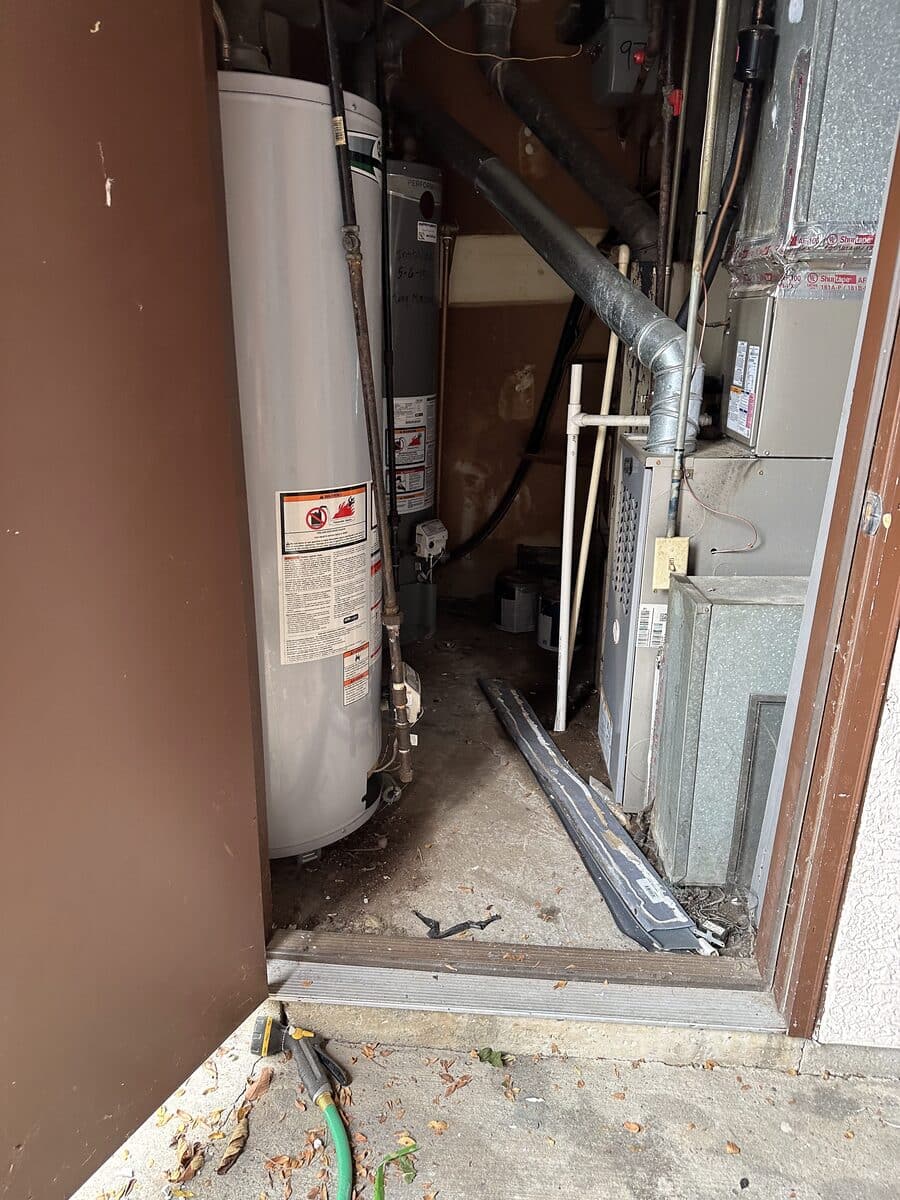
Three moves before anything else: stop the water (main shutoff near the water heater, turned clockwise; individual supply valves for fixture leaks), protect yourself (stay clear of standing water near outlets and switches; leave if the water may be contaminated), and document everything — photos and video before touching anything, receipts for every emergency expense, insurer notified within 24 hours.
Call a professional when
- The water category is unknown or contaminated, or the basement is flooded
- Standing water covers more than a few square feet, or water has sat over 24 hours
- Drywall, insulation, or framing is visibly soaked, or you smell mold
Mold starts in 24–48 hours in a saturated Columbus home; professional extraction and drying typically runs 3–5 days. The classic mistakes: vacuuming standing water with a household vacuum, running the HVAC before assessment, pulling carpet without checking underneath, and ignoring “small” leaks. Minor events run $1,500–$3,500, moderate $3,500–$7,000, major $7,000–$20,000+ — and sudden losses from burst pipes, appliance failures, and storms are typically covered by homeowners insurance.