
Hoarding Cleanup • Education
Clutter vs Hoarding: What's the Difference?
You don't need a label—you need clarity. Use this guide to spot the difference, identify safety triggers, and choose the next step without escalating conflict. Based on our experience with Columbus families, tenants, and property managers.
Fast rule: if bed/bath/kitchen/exits aren't usable, treat it as a safety issue first.
Real-world: Columbus apartments often require controlled workflow (hallways, elevators, dumpsters).
Quick signs (the practical version)
Don't argue about definitions. Answer one question: are rooms functioning safely? If not, treat it as hoarding-level conditions and prioritize safety + access.
Clutter: the problem is volume
It's too much stuff + no system. Sorting and removal improves things fast.
- Rooms still usable
- Discarding is uncomfortable, but doable
- Progress sticks once there's a simple "home" for things
Hoarding-level: the problem is discarding
Discarding triggers distress or conflict, and accumulation outruns removal.
- Room function breaks down
- Decision-making becomes the bottleneck
- Conflict increases when others "just clean it out"
Safety triggers (act first)
If any of these are true, stop debating and prioritize stabilization.
- Blocked exits or unsafe paths
- Unstable piles / fall risk
- Pests, odor, or contamination concerns


Side-by-side comparison
If you only read one thing on this page, read this.
| Category | Clutter | Hoarding-level conditions |
|---|---|---|
| Core issue | Too much stuff / disorganization | Difficulty discarding + accumulation |
| Room function | Still usable (with effort) | Not reliably usable or safe |
| Decision-making | Overwhelm; "Where do I start?" | High distress/conflict about discarding |
| Access & egress | Messy, but passable | Blocked exits or unsafe paths |
| Health concerns | Typically minimal | May involve pests/odor/contamination risk |
| Support that fits | Organizer + targeted removal | Controlled workflow + coordination |
| Time to reset | Hours to a weekend | Days to weeks (conditions vary) |
Mini quiz (60 seconds)
Answer honestly. The output tells you the safest next move.
This is a practical guide—not a diagnosis. If there's safety risk, prioritize access first.
Levels you can recognize
No labels needed. Identify the level and choose the next step.
Overfull / cluttered
Rooms function. Storage and surfaces are maxed out.
- Best fit: organizing + targeted removal
- Goal: reduce volume and create a simple system
Hard to use
Paths are narrowing, stacks are growing, function is slipping.
- Best fit: structured plan + faster removal
- Goal: restore safe paths and working rooms
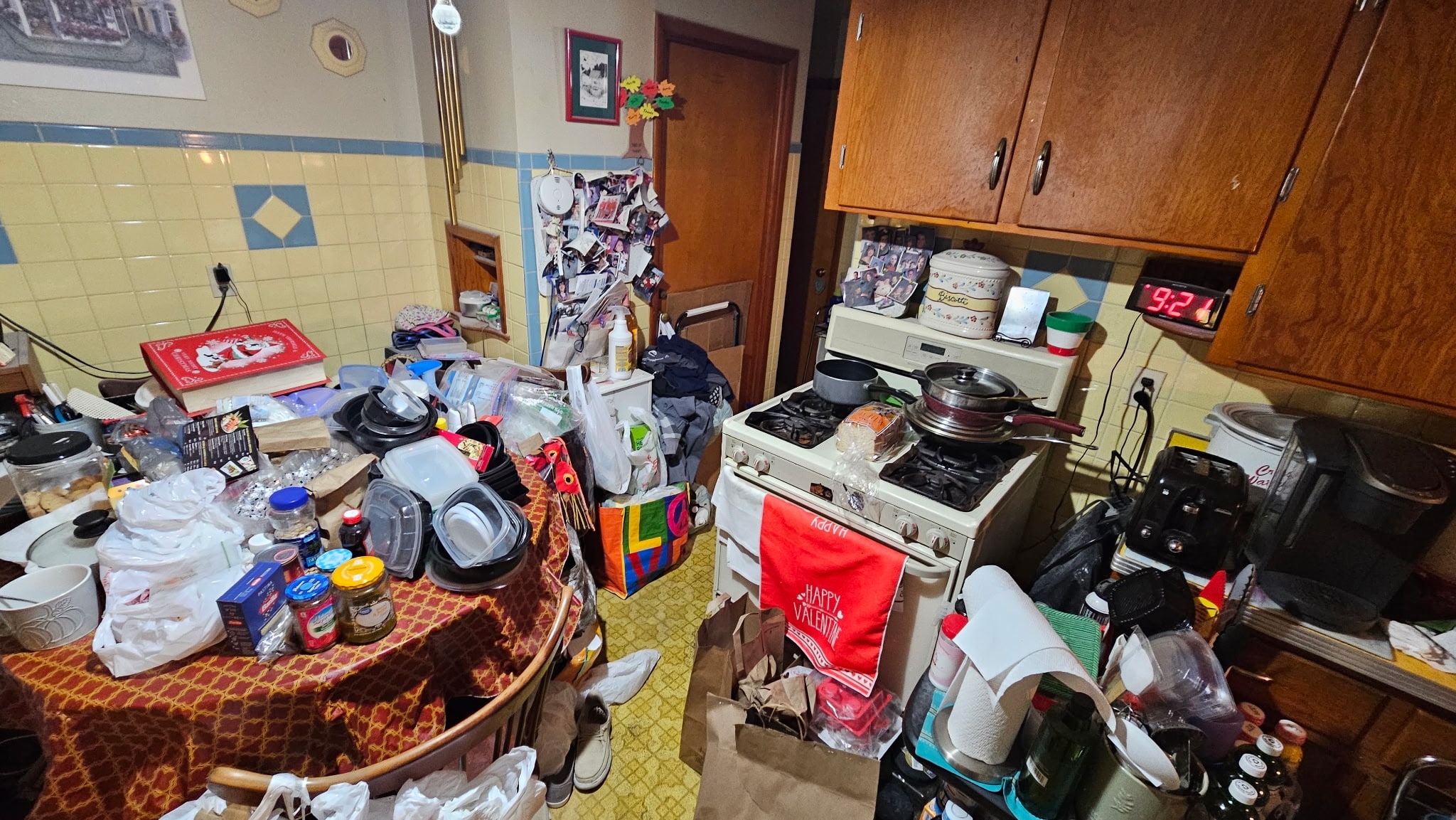
Unsafe / non-functional
Blocked exits, unstable piles, pests/odor, or utilities impacted.
- Best fit: safety-first, controlled workflow
- Goal: stabilize access and reduce risk quickly


Pricing factors (what actually changes cost)
Costs vary because conditions vary. Here are the real drivers in Columbus hoarding cleanup situations.
- Volume + density (how much, how packed)
- Access (stairs, parking distance, elevators, hallways)
- Disposal (dump fees, special handling)
- Sorting requirements (keep/donate/trash)
- PPE + safety controls (if needed)
- Odor/pest mitigation (if applicable)
Get a real range
Start with the cost guide, then request an estimate based on photos of your Columbus property.
Tip: photos of main rooms + hallways + exits get the fastest accurate range.
What to do next (without making it worse)
Most failures happen because people push too hard or skip safety. Here's the sane order.
Clear exits and one safe path. If needed, start with one "functional room."
Agree on "keep zones" and decision rules. Don't surprise-trash.
Once decisions are predictable, removal becomes straightforward.
Families
Start with safety + access. Make "keep zones" before anything moves.
Prep checklist for familiesTenants (apartments)
Columbus apartment hallways, elevators, and dumpster rules require controlled workflow. Plan once.
Apartment workflowProperty teams
Documentation + controlled workflow reduces complaints and timeline surprises in Columbus buildings.
Property manager servicesRelated resources
If you're ready to move from "what is it?" to "what do we do?" start here.

Controlled workflow, documentation, and clear next steps.

What drives pricing: volume, access, disposal, safety controls, conditions.

A low-conflict way to prep photos, decisions, and access before cleanup.
Reviews (Columbus, OH)
Common feedback patterns from families and property stakeholders who needed a calm, controlled plan.
Consistent feedback mentions clear communication, respectful crew, and step-by-step planning that reduced family conflict during Columbus hoarding cleanups.
Property teams consistently note controlled workflow, regular updates, and minimal disruption to Columbus buildings and tenants.
Common themes include prioritizing access and safety, working within tight timelines, and calm crew presence in Columbus apartment situations.
Why iDry Columbus
We're built for sensitive cleanouts where structure matters—calm workflow, clear updates, and real progress in Columbus homes and properties.
- Licensed & insured with a documented process
- Photo documentation if you want it (family/landlord updates)
- Discreet, respectful crew—no spectacle
- Coordination with family / property teams when it reduces stress
What we are: structured, respectful, documentation-first. What we aren't: judgmental or chaotic.

FAQ (real answers)
Short, practical answers to what people actually ask about clutter vs hoarding situations.
What's the difference between clutter and hoarding?
Is hoarding the same as being messy?
What's the clearest sign it's more than clutter?
Should I throw things away when the person isn't home?
How do I know if someone I love has a hoarding problem?
Can hoarding get better on its own?
What should I do first if I think it's hoarding?
Can you estimate from photos?
What if there are odor or pests?
Is hoarding a mental health condition?
Serving Columbus and Central Ohio
We work with families, apartment residents, and property managers throughout the Columbus metro area. If you're in Central Ohio and unsure about coverage, call or text—we'll tell you straight.
- Clintonville
- Short North
- German Village
- Victorian Village
- Grandview Heights
- Bexley
- Worthington
- Upper Arlington
- Downtown Columbus
- Franklinton
- Merion Village
- Olde Towne East
- Dublin
- Westerville
- Hilliard
- Gahanna
- Reynoldsburg
- Grove City
- Pickerington
- New Albany
- Powell
- Lewis Center
- Canal Winchester
- Whitehall
Request an estimate
Send photos of main rooms + hallways + exits. We'll reply with a clear plan and range for your Columbus property.
Prefer to talk first? Call/Text 614-810-0000