
Curtis Teets · 30-year Columbus restoration veteran.
Water Damage Restoration Columbus — 30 Years, 60-Minute Dispatch
Standing water. Soaked walls. The clock is ticking. iDry Columbus dispatches in 60 minutes — extraction, structural drying, and full insurance documentation from a team with 30 years of Columbus restoration experience.

Columbus's water damage restoration team. Serving Clintonville, Upper Arlington, Westerville, Dublin, Worthington, Hilliard, and all of Franklin County for 30 years. Call 614-810-0000 — we dispatch in 60 minutes.
Why 60 Minutes Changes Everything
After water damage hits your Columbus home, every minute counts. Mold begins developing in 24–48 hours per EPA guidance. The first 60 minutes determine whether this is a manageable cleanup or a full-scale remediation project.
Time before mold begins in water-saturated Columbus home. iDry's 60-minute dispatch closes the window before it opens.
Standing water spreads faster than most people expect. Water from a burst pipe, appliance failure, or sewage backup doesn't stay put. It wicks into drywall, saturates subfloor, and reaches structural framing within hours. The damage you can see on the floor is only a fraction of the total moisture.
Columbus homes are built on clay soil. Clay doesn't drain — it holds water against your foundation. When water damage happens inside your home and moisture reaches the foundation walls, the clay outside compounds the problem. Basements stay wet longer in Columbus than in cities built on sandy or loamy soil.

The mold timeline is non-negotiable. Mold needs three things: moisture, a food source, and time. Every Columbus home provides the first two — drywall, framing, and carpet backing are organic materials. The only variable you control is time. Calling within 60 minutes can prevent mold entirely. Calling 3 days later means you need mold remediation on top of water restoration.
Types of Water Damage We Handle in Columbus
Copper and galvanized pipes in Columbus homes built 1920s–1980s fail most often in winter below 20°F. Supply lines release up to 8 gallons per minute.
Sewer line failures and combined sewer overflows during heavy Columbus rain push contaminated water into basements. Category 3 damage requiring specialized cleanup.
Sump pump failures, foundation cracks, and Columbus clay soil create the conditions for basement flooding. The most common water damage scenario we respond to.
Water heaters, washing machines, dishwashers, and refrigerator ice makers cause water damage in every era of Columbus housing. Slow leaks are often worse than sudden failures.
Severe thunderstorms, ice dams, and wind-driven rain cause roof leaks, window failures, and exterior water intrusion. Spring and summer bring the highest volume.
Moisture intrusion in crawl spaces goes undetected for months. Columbus's high water table and clay soil make crawl spaces vulnerable — damage compounds silently.
When you do not need us
Honest answer: a clean-water spill under about ten square feet on a sealed hard surface, wiped up within a few hours, is a towel-and-box-fan job — not a restoration claim. Run a fan and a dehumidifier for 24 hours and watch for cupping or odor.
Call us when any of these is true: drywall, trim, or subfloor got wet; the water came from a drain, sump failure, or outside (Category 2–3); it sat longer than 24 hours; hardwood is cupping; or a finished basement is involved. Those are the jobs where waiting multiplies the cost. Flood safety basics: ready.gov/floods.

How iDry Restores Water-Damaged Columbus Homes
Six steps. Same day. Every job documented for your insurance adjuster.
60-Minute Dispatch
Dispatch in 60 minutes. We confirm your Columbus address and dispatch immediately. Every truck carries full extraction and drying equipment — no waiting for a second crew.
Water Extraction
Industrial-grade extraction. Industrial pumps and truck-mounted extractors remove standing water. We protect your belongings while we work. Every gallon removed now means less drying time and lower mold risk.
Thermal Imaging Assessment
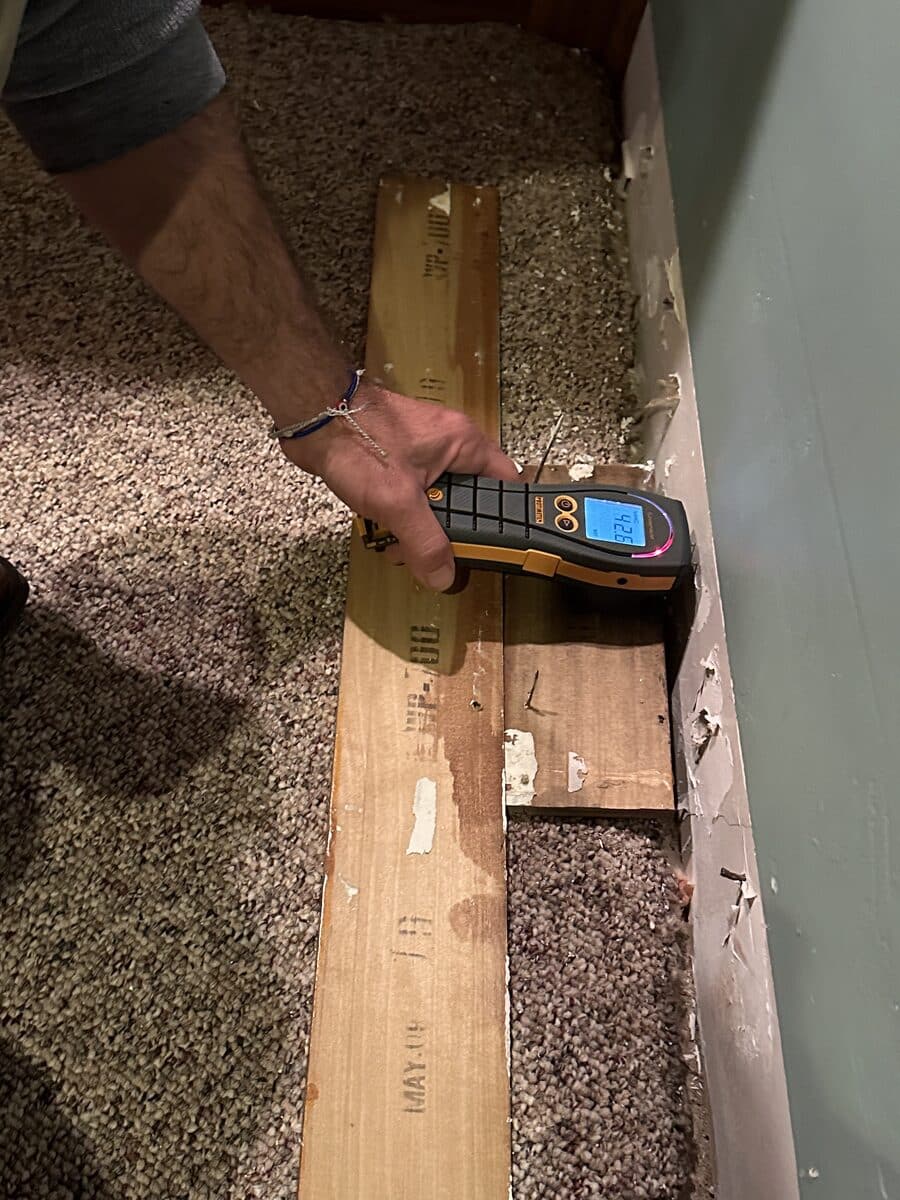
Thermal imaging maps hidden moisture. Thermal cameras and calibrated moisture meters map hidden moisture inside walls, ceilings, and under floors. We don't guess where the water went — we verify it. Full water extraction targets every affected area.
Structural Drying
Continuous structural drying. Industrial air movers and Phoenix dehumidifiers drive moisture out of drywall, framing, and subfloor. This takes 3–5 days depending on scope. Equipment gets adjusted daily based on moisture readings.
Daily Monitoring
Daily verification. A technician returns every 24 hours to take moisture readings. We don't declare the job done until readings confirm the dry standard — not when it looks dry.
Documentation & Prevention
Complete documentation package. Photos, moisture logs, and scope of work go to your insurance adjuster. Antimicrobial treatment where warranted. We coordinate with your contractor if structural repairs are needed.
Average drying time for water damage in Columbus homes with professional equipment. Daily monitoring confirms when the dry standard is met.
The process, in six steps
- Call and dispatch. Phones answered 24/7; a crew is dispatched the moment you call with extraction and drying gear loaded.
- Assessment and moisture mapping. Thermal imaging and pin meters map everything wet, including moisture you cannot see inside walls and subfloor.
- Water extraction. Truck-mounted pumps remove standing water; extraction is the cheapest gallon you will ever pay for — every gallon left raises drying time and cost.
- Controlled removal. Only materials that cannot be dried come out — wet pad, swollen MDF, drywall past the wick line. Everything removed is photographed for your claim.
- Structural drying, days 1–4. Air movers and dehumidifiers run continuously with daily metered readings until wood is under 16% moisture content and indoor humidity holds below 60%.
- Verification and documentation. Final moisture map, drying logs, and photos go into one file your adjuster can approve without follow-up questions.
What Water Damage Restoration Costs in Columbus
Cost depends on scope — how much water released, how long it sat, and what materials it reached. Most Columbus homeowners insurance covers water damage from sudden, accidental events. iDry documents everything your adjuster needs from minute one. Call us at 614-810-0000 — we help you understand your coverage situation when we arrive.
Minor
$1,500–$4,000+
Minor scope. Single-room damage, quick response, extraction and drying only. No structural material replacement. Insurance typically covers the full scope.
Moderate
$4,000–$8,000+
Moderate scope. Multi-room damage, subfloor saturation, 3–5 days of drying. May include drywall removal. Most common job size for Columbus water damage calls.
Major
$8,000–$15,000+
Major scope. Multi-floor or delayed-discovery damage, ceiling collapse, structural repair coordination needed. Insurance typically covers sudden and accidental damage.
Ohio homeowners insurance typically covers water damage restoration — extraction, drying, and mold prevention — when the damage was sudden and accidental, not from deferred maintenance.
Waiting multiplies the cost. A water event caught within 60 minutes might cost $2,000 to clean up. The same event discovered 12 hours later can push $8,000 or more. That's before any mold remediation is needed. Speed is the single biggest factor in final cost.
What Insurance Usually Covers
- Water extraction and removal
- Structural drying (equipment + labor)
- Mold prevention treatment
- Damaged drywall and insulation removal
- Content damage caused by the water
What Insurance Usually Doesn't Cover
- Flooding or groundwater (separate flood policy)
- Damage from known, ignored leaks
- Pre-existing damage or deferred maintenance
- Damage caused by lack of home maintenance
Plan ahead. See our full water damage cost guide and insurance documentation page for detailed scenarios.
What moves the number
| Factor | Effect on cost | Why |
|---|---|---|
| Water category | Cat 3 (sewage) can double a Cat 1 job | Contaminated water forces removal and sanitizing of porous materials that clean water would only dry |
| Time before the call | Damage found after 24+ hours costs 3–5× more | Water keeps wicking upward and mold starts in 24–48 hours, adding remediation to restoration |
| Materials reached | Hardwood and subfloor add the most | Drywall dries or replaces cheaply; cupped hardwood and saturated subfloor mean specialty drying or rebuild |
| Finished vs. unfinished space | Finished basements cost more to restore | Carpet, trim, and built-ins multiply both demolition and rebuild scope |

Water Damage Risk by Columbus Neighborhood
1920s–40s homes with galvanized and cast iron pipe. Highest water damage frequency in Columbus — burst pipes, sewer backups, and basement flooding all peak here during winter.
Historic district with original plumbing running through unheated basements. Heritage compliance adds restoration complexity. We've worked in German Village for 30 years.
1950s–70s colonials with copper pipe throughout and uninsulated exterior walls. Burst pipe claims spike every January. Basement flooding common during spring thaw.
1970s–90s split-level homes with multiple water entry points. Active competitive market — iDry's 60-minute dispatch and documentation standard sets us apart.
1980s–2000s housing with commercial-grade copper supply lines. Columbus clay soil compounds basement flood risk when any water damage occurs.
1950s–70s colonial stock with copper-era plumbing. Similar freeze profile to Upper Arlington. 30-year track record and documentation differentiate us from Quick 2 Dry.
iDry Columbus also serves Hilliard, New Albany, Sunbury, Gahanna, Blacklick, Pickerington, Canal Winchester, Grove City, Obetz, and surrounding areas throughout Franklin County and Central Ohio.
What Columbus Homeowners Say About iDry
-
Kendra Turner ★★★★★
iDry Columbus went above and beyond for my family when we had a water emergency. They responded quickly, communicated clearly through the whole process, and left our home in great shape. Curtis and the team treated us like family — not just another job.
-
David Warner ★★★★★
The way Curtis and his crew handled our situation was old school in the best way — honest, respectful, and thorough. They cleaned out years of buildup without judgment and left the property ready for renovation. Communication was clear from start to finish.
-
Stacy Connelly ★★★★★
We had a mold problem in our basement that two other companies failed to fix properly. iDry came in, identified the source of moisture, and remediated everything correctly. The musty smell is completely gone and the basement is dry. Professional, on time, and fair pricing.
Related Water Damage Services
Explore our full service library. Every page below covers a specific damage scenario Columbus homeowners face — from storm damage to crawl space flooding. Visit iDry Columbus for our complete restoration service list, including fire damage restoration and hoarding cleanup.
Budgeting a repair? See what wall water damage repair costs in Columbus. Commercial property? Commercial water damage restoration works around your business hours. Drying it yourself first? Size the unit with the dehumidifier size calculator.

Burst Pipe? Your 60-Minute Dispatch Starts Here
Copper and galvanized pipes in Columbus homes burst most often in winter. See our guide for neighborhood-specific freeze risk and emergency response.

Flooded Basement? Here's What to Expect
The most common water damage call in Columbus — sump pump failures, foundation cracks, and spring groundwater. What cleanup costs and what insurance covers.

Sewage Backup Requires Specialized Cleanup
Contaminated water from sewer line failures and combined sewer overflows during Columbus storms. Category 3 damage requiring antimicrobial treatment.

Professional Water Extraction — Every Gallon Matters
Industrial extraction removes standing water faster than any rental equipment. See how professional extraction prevents secondary damage and reduces total cost.

What Water Damage Restoration Actually Costs
Real cost ranges for Columbus water damage restoration — from minor single-room cleanup to major multi-floor projects. Insurance coverage explained.
Mold Starts in 24–48 Hours — Act Before It Does
If water damage wasn't caught quickly, mold may already be developing. Learn how iDry handles mold remediation — from inspection to clearance.
Frequently Asked Questions About Water Damage Restoration
How quickly should I call a water damage restoration company?
Within the first 60 minutes if possible. Mold begins developing in 24–48 hours in Columbus homes, and every hour of delay increases drying time and cost. iDry Columbus dispatches in 60 minutes, 24/7. Call 614-810-0000 — the sooner extraction begins, the less damage accumulates.
Does homeowners insurance cover water damage restoration in Ohio?
Most Ohio homeowners insurance covers water damage from sudden, accidental events — burst pipes, appliance failures, and storm damage. Coverage typically includes extraction, drying, and mold prevention. It usually doesn't cover flooding, groundwater, or damage from deferred maintenance. iDry documents everything for your adjuster from day one. Call 614-810-0000.
What's the difference between water damage restoration and water extraction?
Water extraction removes standing water — the first step. Restoration includes extraction plus structural drying, moisture monitoring, mold prevention, and insurance documentation. iDry Columbus handles the full restoration scope. See our water extraction page for details. Call 614-810-0000.
How long does water damage restoration take in Columbus?
Most Columbus water damage jobs take 3–5 days for the drying phase, depending on scope and materials affected. Extraction happens on day one. Equipment runs continuously with daily monitoring until the dry standard is confirmed — not when it looks dry. Call 614-810-0000 for a free assessment.
Can I handle water damage cleanup myself?
Small spills, yes. But if water reached your walls, subfloor, or sat for more than a few hours — professional equipment is the difference between a cleanup and a mold remediation project. Rental fans don't reach inside wall cavities. Thermal cameras show what towels and box fans miss. Call 614-810-0000 for a free inspection.
What causes the most water damage in Columbus homes?
Burst pipes in winter, sump pump failures during storms, and appliance leaks — in that order. Columbus's clay soil and aging housing stock from the 1920s–1980s create conditions other cities don't face. Each cause has a different response protocol. Call 614-810-0000 and we'll match the right approach to your situation.
How do I know if I have water damage behind my walls?
Discoloration, bubbling paint, musty odor, or soft spots when you press on drywall — all signs of hidden moisture. Your water bill spiking without explanation is another indicator. iDry uses thermal imaging to pinpoint hidden water damage without tearing open walls. Call 614-810-0000 for an inspection.
Will water damage lead to mold in my Columbus home?
If moisture isn't removed within 24–48 hours, yes. Columbus humidity and organic building materials — drywall, carpet backing, wood framing — provide ideal mold conditions. Professional drying within the first day prevents most mold growth entirely. Call 614-810-0000 — we start drying the same day. See our mold prevention guide.
What should I do while waiting for the restoration crew?
Turn off your main water supply if a pipe burst. Move valuables off wet floors. Open cabinet doors to help air circulate. Do not use your household vacuum on standing water — it's not designed for it and creates electrical risk. Stay away from electrical outlets near water. Call 614-810-0000.
Does iDry Columbus handle commercial water damage?
Yes. Office buildings, retail spaces, warehouses, and multi-unit properties — we handle commercial water damage across Central Ohio. Commercial jobs often need faster timelines and certified documentation. See our commercial water damage restoration page or call 614-810-0000.
Get Your Free Water Damage Assessment
Describe what happened and we'll call you back within minutes. For active emergencies, call 614-810-0000 now — we dispatch faster by phone.
Service Areas Across Central Ohio
iDry Columbus serves Franklin County and surrounding areas with 24/7 emergency water damage restoration.
The First 24 Hours After Water Damage
Three moves before anything else: stop the water (main shutoff near the water heater, turned clockwise; individual supply valves for fixture leaks), protect yourself (stay clear of standing water near outlets and switches; leave if the water may be contaminated), and document everything — photos and video before touching anything, receipts for every emergency expense, insurer notified within 24 hours.
Call a professional when
- The water category is unknown or contaminated, or the basement is flooded
- Standing water covers more than a few square feet, or water has sat over 24 hours
- Drywall, insulation, or framing is visibly soaked, or you smell mold
Mold starts in 24–48 hours in a saturated Columbus home; professional extraction and drying typically runs 3–5 days. The classic mistakes: vacuuming standing water with a household vacuum, running the HVAC before assessment, pulling carpet without checking underneath, and ignoring “small” leaks. Minor events run $1,500–$3,500, moderate $3,500–$7,000, major $7,000–$20,000+ — and sudden losses from burst pipes, appliance failures, and storms are typically covered by homeowners insurance.