
Curtis Teets · 30-year Columbus restoration veteran.
Mold vs Mildew: How to Tell the Difference in Your Home
That growth in your basement might be harmless mildew — or it might be active mold releasing toxic gases. Here's how to tell, with real photos from Columbus homes we've inspected.

Locally owned · 30 years in Columbus · Free inspections · Real photos from real jobs
Mold vs Mildew at a Glance
The short answer is texture. Mildew sits flat on surfaces and wipes off with a damp cloth. Mold grows into materials — it's fuzzy, raised, and comes back after cleaning because the roots are still inside the wall, wood, or drywall.
Color tells part of the story. Mildew is usually white or gray. Mold ranges from green and black to orange and white — and multiple colors on the same wall means multiple species are growing, which signals a moisture problem that goes deeper than the surface.
- Texture: Flat, powdery, surface-level
- Color: White, gray, light yellow
- Location: Bathroom tile, shower grout, window sills
- Smell: Mild musty odor
- Health risk: Low — irritation for sensitive individuals
- DIY? Usually yes — surface cleaning works
- Texture: Fuzzy, raised, penetrates material
- Color: Black, green, orange, white, multi-color
- Location: Basements, behind drywall, crawl spaces, attics
- Smell: Strong musty or earthy odor
- Health risk: Moderate to high — respiratory, allergic reactions
- DIY? Only if under 10 sq ft and surface-only
Not sure which one you're looking at? Send us a photo or call 614-810-0000 — we'll tell you what it is and whether you need help. No charge, no pressure.
What Mold Actually Looks Like in Columbus Homes
Stock photos don't help you identify what's in your basement. These are real photos from Columbus homes we've inspected and treated — see our full mold identification photo guide for every type of growth you might be looking at right now.
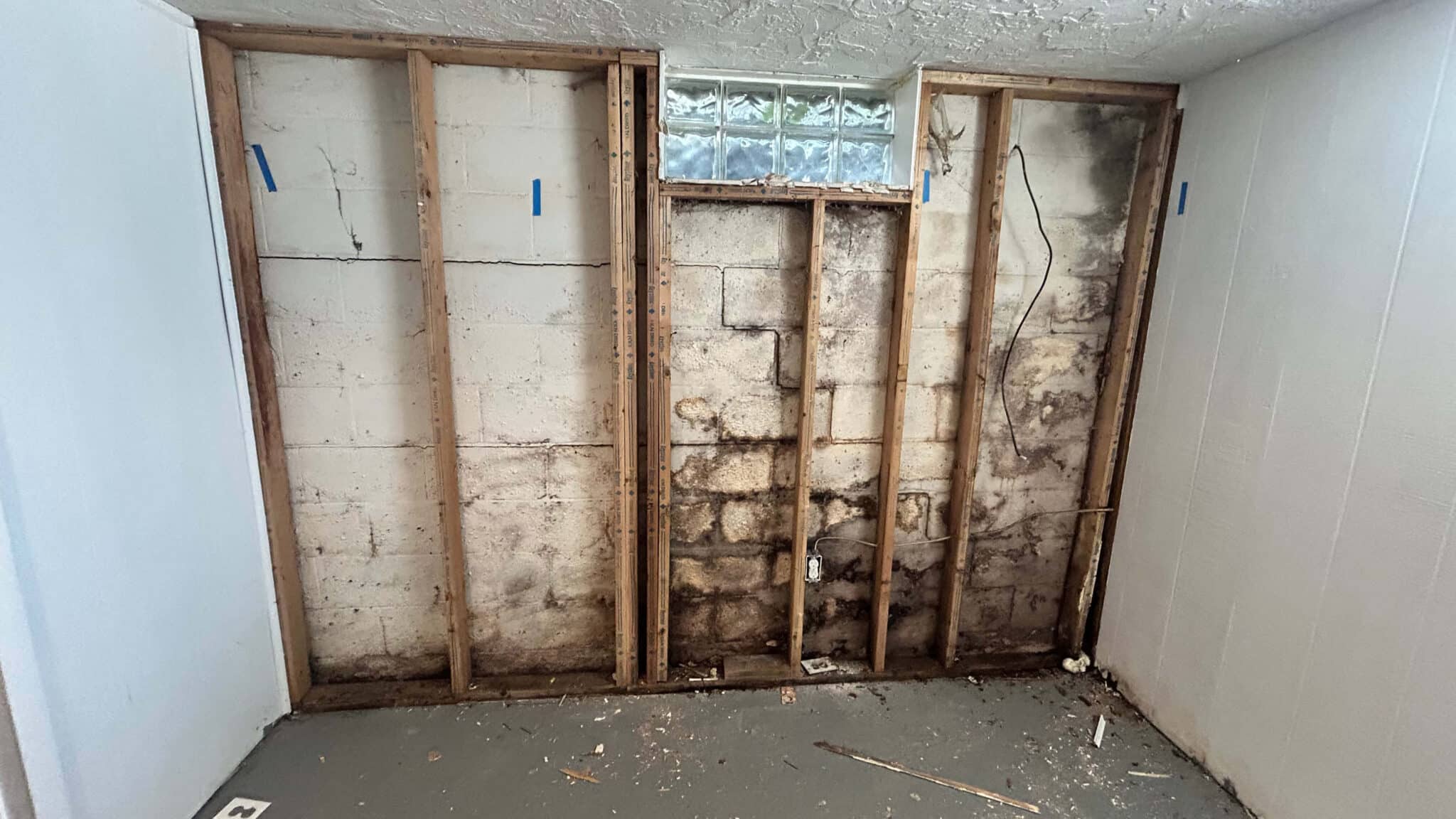
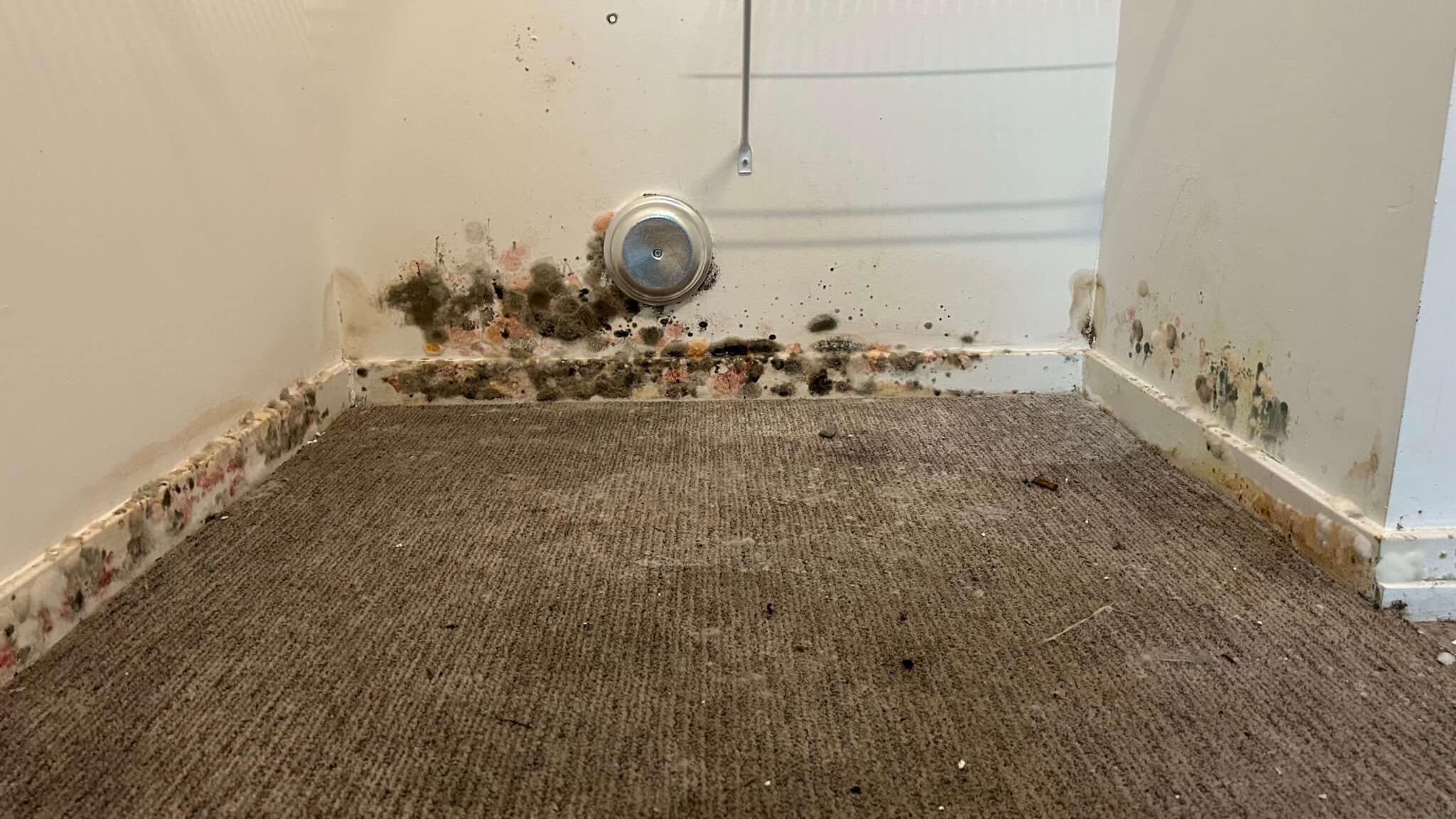
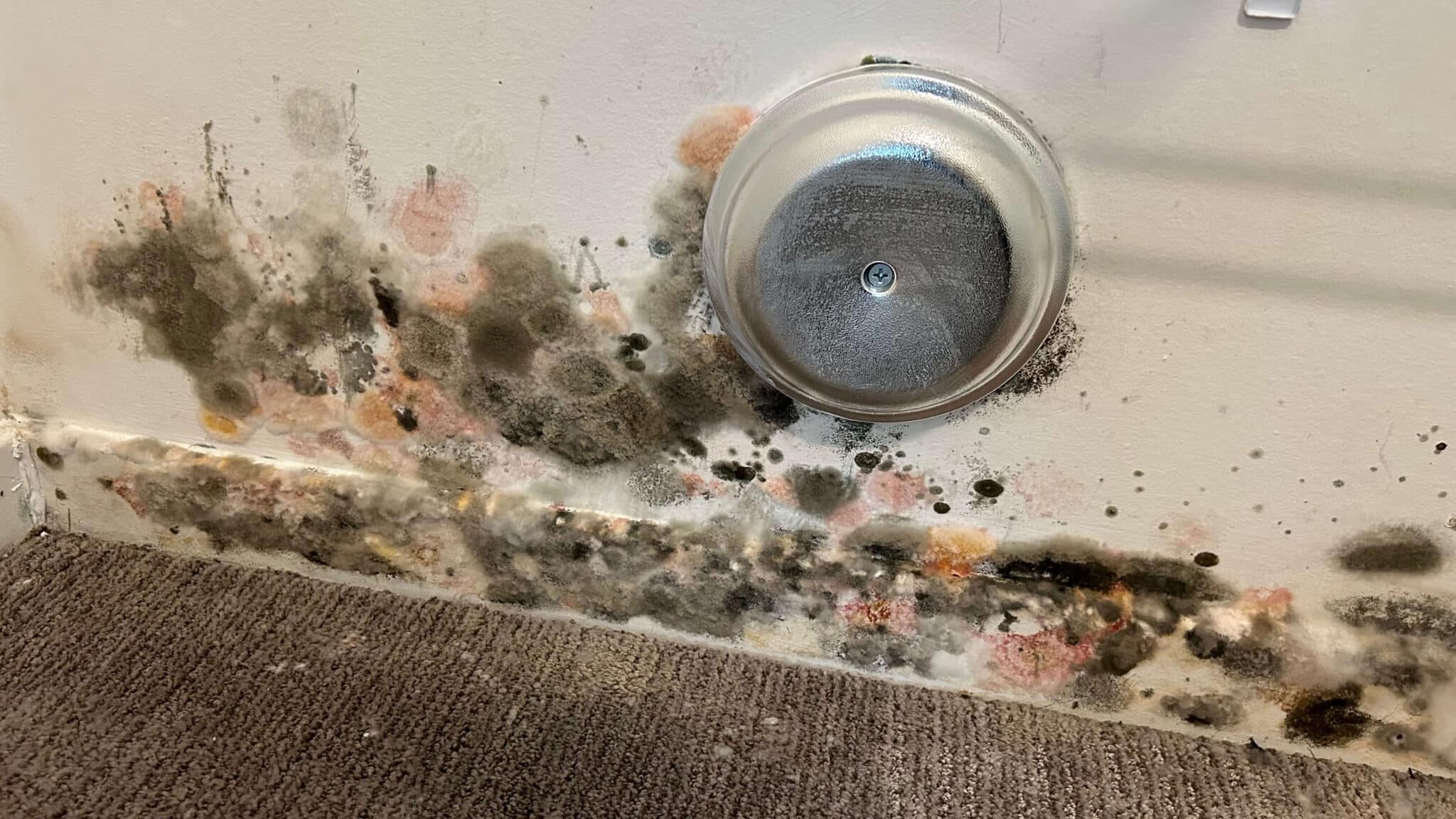

Think you have mold? We'll inspect your home for free and show you exactly what we find — no obligation. Call 614-810-0000 or Get a Free Mold Inspection
What Mildew Looks Like (and When It's Harmless)
Mildew is surface growth — and it's usually not dangerous. If you see flat, powdery white or gray patches on your bathroom tile, shower grout, or window sill, that's almost certainly mildew. It grows on damp surfaces but doesn't penetrate the material underneath.
The wipe test works here. Dampen a cloth with white vinegar or diluted bleach. If the growth wipes off and the surface underneath looks clean and undamaged — that's mildew. Clean it, improve ventilation, and you're done.
Bathroom mildew is not basement mold. The mildew on your shower grout forms because bathrooms are humid. That's normal and manageable. The growth on your basement wall forms because moisture is migrating through concrete or leaking behind drywall — that's a different problem entirely.
When "mildew" isn't mildew. If it comes back within a week after cleaning, there's a moisture source feeding growth from behind or below. If it's fuzzy rather than flat, or you smell a strong earthy odor, you're looking at mold. Call 614-810-0000 if it keeps returning — we'll find the source.
The Columbus Trap: Efflorescence vs White Mold
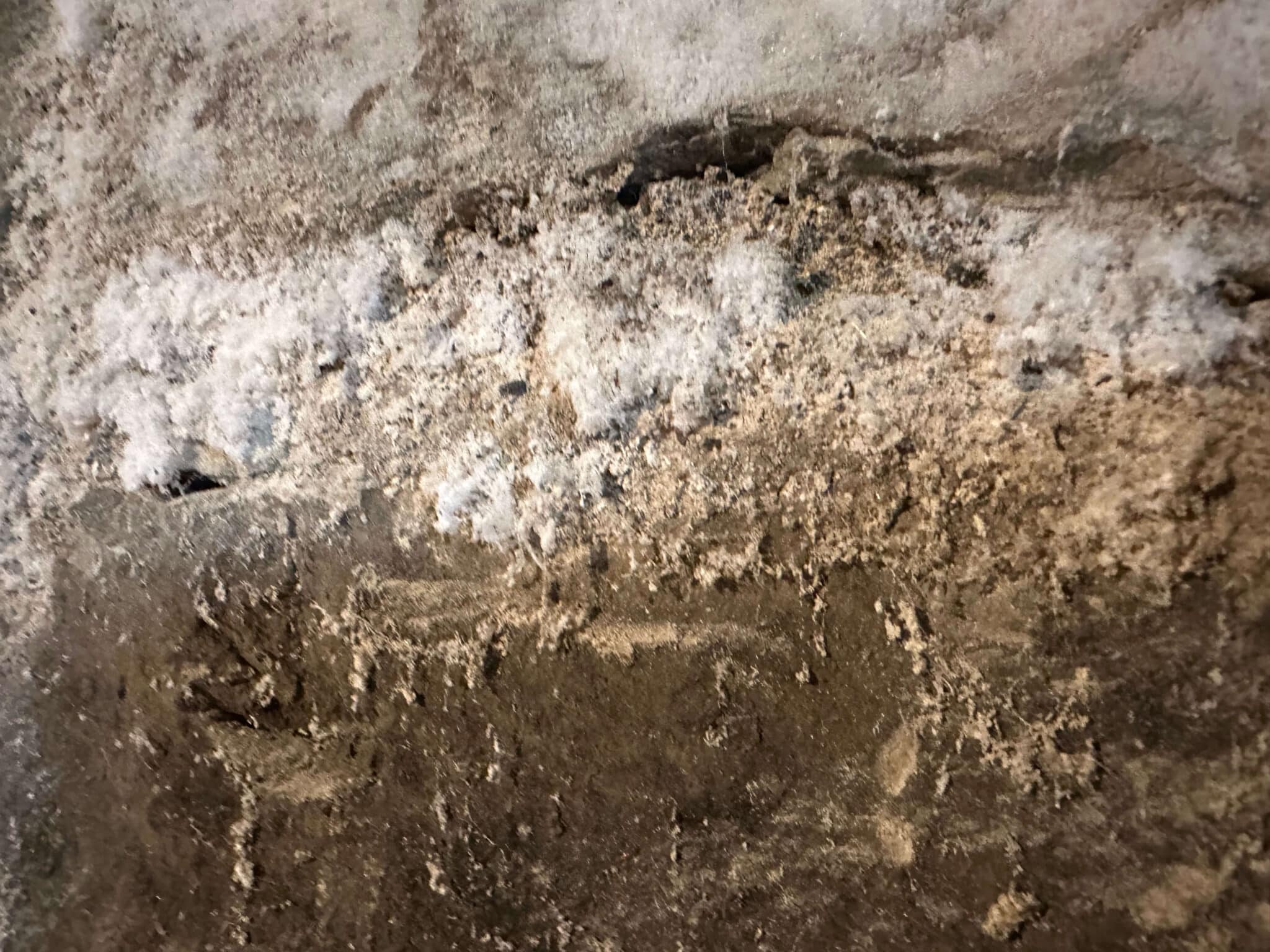
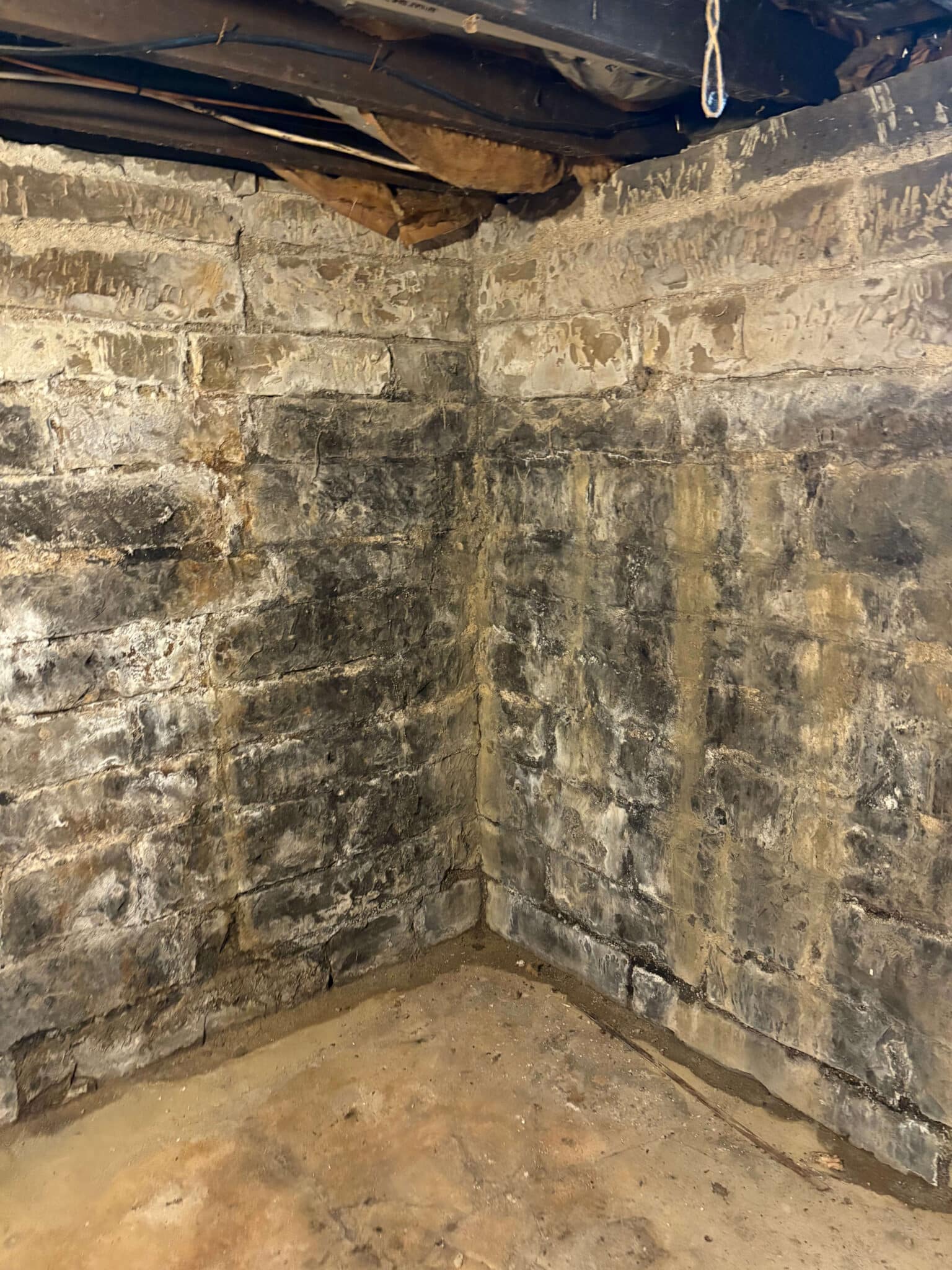
That white stuff on your basement wall might not be mold at all. Columbus sits on clay soil over limestone bedrock. When water pushes through your concrete or stone foundation walls, it dissolves mineral salts and deposits them on the surface as it evaporates. Those white, crusty, crystalline deposits are called efflorescence — and they're not biological.
How to Tell the Difference
Touch it. Efflorescence feels gritty and crystalline — like fine salt. White mold feels soft or fuzzy. If you're wearing gloves and it crumbles between your fingers, it's mineral deposits, not mold.
Spray it. Mist the white area with water. Efflorescence dissolves or disappears temporarily. Mold doesn't react — it stays the same or gets slightly darker when wet.
Here's the catch for Columbus homeowners. Efflorescence itself is harmless, but it means water is moving through your foundation. That same moisture creates the conditions mold needs to grow. We see both on the same wall in Clintonville, German Village, and Upper Arlington homes all the time — especially in pre-1970s construction with no vapor barrier.
Not sure what you're looking at? Send us a photo or call 614-810-0000 — we'll tell you whether it's mineral deposits, mold, or both. Free, no obligation.
When to DIY and When to Call a Professional
Not everything requires a professional. If you catch surface mildew early, you can handle it yourself. Here's an honest breakdown of when DIY works and when it doesn't.
- Surface mildew on tile, grout, or window sills
- Growth area smaller than 10 square feet
- Flat, powdery texture that wipes off easily
- No musty smell beyond the immediate area
- No history of water damage or flooding
- Nobody in the home has respiratory issues
Clean with white vinegar or diluted bleach. Improve ventilation. Monitor for recurrence.
- Fuzzy, raised, or 3D texture — growth is into the material
- Area larger than 10 square feet or spreading
- Growth behind drywall, in wall cavities, or on structural elements
- Strong musty or earthy smell in the room
- Visible water damage, staining, or known leak history
- Anyone in the home has asthma, allergies, or respiratory conditions
- Growth comes back within a week after cleaning
- Multiple colors on the same surface
These conditions mean the growth has penetrated the material and/or there's an active moisture source. Surface cleaning won't solve the underlying problem.
The 10-square-foot rule comes from the EPA. Below that threshold, most homeowners can handle cleanup safely with proper ventilation and an N95 mask. Above it — or if the growth is behind walls — a professional mold inspection is the safe first step.
What Happens During a Professional Mold Inspection
No surprises, no pressure. We show you everything we find, explain what it means, and you decide what happens next. Here's the process:

A thorough inspection takes 30-60 minutes for a typical Columbus home. Larger properties or multi-area concerns take longer. The inspection itself is free — iDry Columbus has performed thousands across Central Ohio. Call 614-810-0000 to schedule.
What Mold Remediation Costs in Columbus
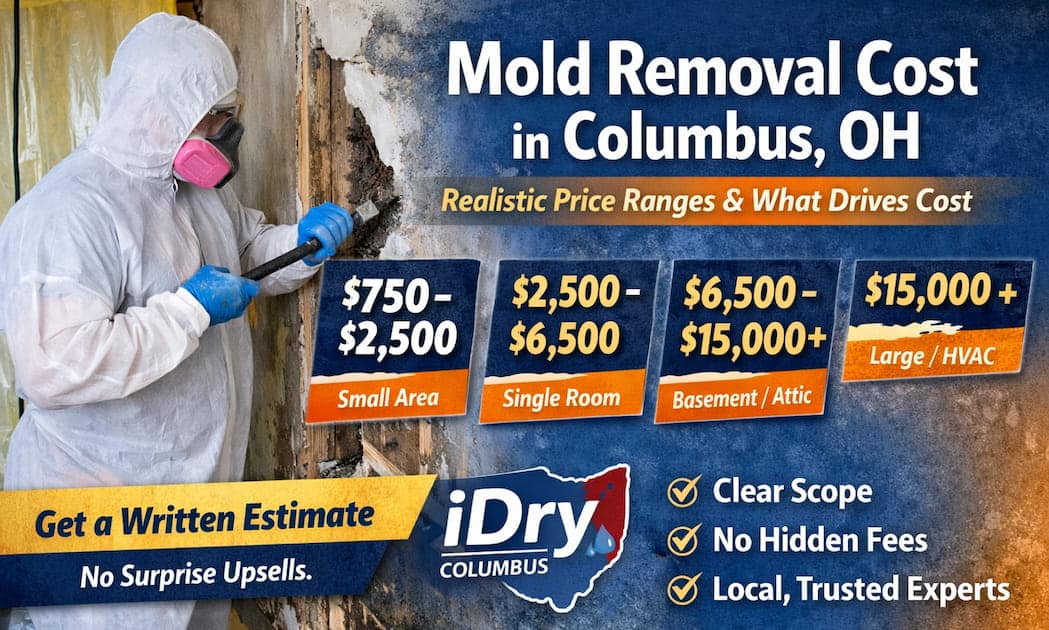
Most Columbus homeowners pay between $1,500 and $4,500 for single-room surface mold remediation — bathroom, basement wall section, or utility area. That includes containment, removal, antimicrobial treatment, and clearance verification.
Larger jobs run $4,500 to $10,000+ when mold has penetrated behind drywall, into structural framing, or spread across multiple rooms. Behind-the-wall mold requires demolition, containment with negative air pressure, and reconstruction — which adds labor and materials.
Insurance typically covers mold when it results from a covered event. A burst pipe that caused water damage that led to mold growth — most Ohio HO-3 policies cover that. Mold from long-term neglected humidity usually isn't covered. We work with your insurance company and document everything they need for the claim.
Get the full cost breakdown on our mold remediation cost guide, or learn about insurance coverage for mold remediation in Columbus.
Why Columbus Homes Get Mold (Not Just Mildew)
Columbus clay soil is the root cause. Central Ohio sits on dense clay that holds moisture against your foundation instead of draining it away. After heavy rain, that clay becomes saturated and presses hydrostatic pressure against basement walls — pushing water through cracks, joints, and porous concrete. When the pressure wins, you get a flooded basement.
Summer humidity accelerates everything. Columbus averages 73% relative humidity in July. When that humid air meets your cooler basement walls — especially below-grade walls that stay around 55-60°F year-round — condensation forms. That condensation feeds mold growth on any organic material: drywall paper, wood framing, carpet padding, stored cardboard.
Construction era matters. Upper Arlington and Clintonville homes from the 1950s-70s were built without vapor barriers between the foundation and framing. Westerville and Dublin homes from the 1980s-90s have them, but 30+ years of settling creates gaps. German Village homes — some over 100 years old — have stone foundations that breathe moisture freely.
The freeze-thaw cycle cracks foundations. Columbus winters drop below freezing regularly, then warm back up. Every cycle expands and contracts your foundation concrete. Over decades, hairline cracks become pathways for water — the same moisture that feeds crawl space mold and HVAC contamination.
1920s-1940s construction with stone and block foundations. No vapor barriers. Mature tree roots disrupt drainage. Highest mold frequency in our service area.
1950s-1970s homes with finished basements, original HVAC, and clay soil drainage issues. Drywall over block walls traps moisture — mold grows invisibly behind the finish.
Historic brick and stone foundations over 100 years old. Porous masonry breathes moisture freely. Efflorescence and mold frequently appear together on the same walls.
1980s-2000s construction with vapor barriers — but 30+ years of settling creates gaps. Sump pump failures during spring thaw are the most common trigger for basement mold in newer subdivisions.
Mixed-era housing with varying foundation quality. Crawl space construction more common east of I-270 — crawl space mold is the primary concern. Ventilation and encapsulation are the solutions.
1930s-1960s construction near Alum Creek floodplain. Higher water table means persistent basement moisture even without visible flooding. Dehumidification is critical year-round.
Columbus homes need Columbus expertise. National franchises follow the same playbook everywhere. We've been solving these exact problems — clay soil, condensation, freeze-thaw cracks — for 30 years in these neighborhoods. Call 614-810-0000.
More Real Photos: What We Find in Columbus Basements
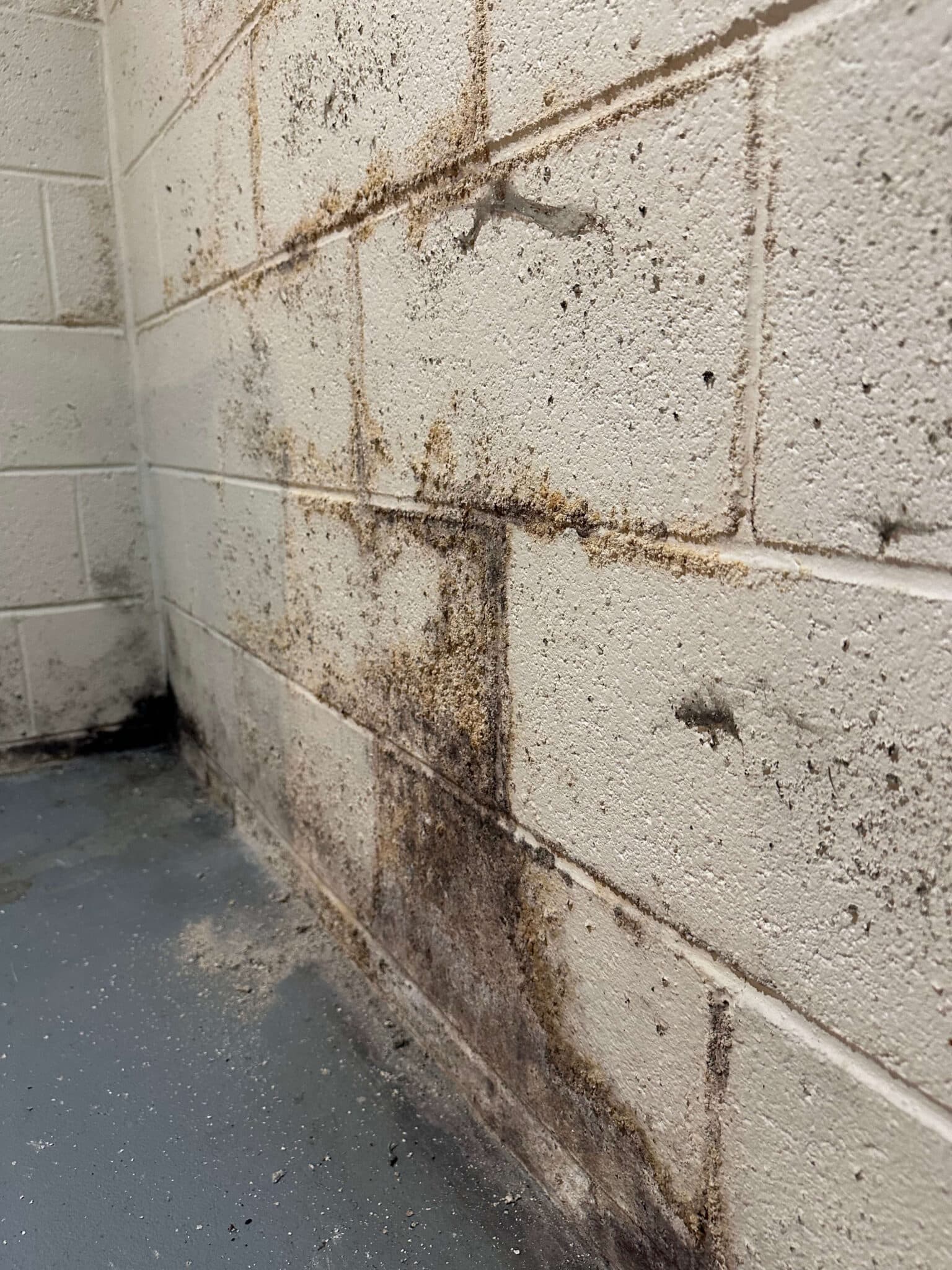

Every photo on this page is from a real Columbus job. We don't use stock images because they don't help you identify what's actually in your basement. These are the real conditions we find every week in homes across Central Ohio.
See something similar in your home? Call 614-810-0000 for a free inspection. We'll take the same kind of photos and show you exactly what's happening in your home.
What Columbus Homeowners Say
-
★★★★★
iDry went above and beyond for us. Curtis and his team responded quickly, were very professional, and took time to walk us through every step. We were so stressed and they truly put us at ease. Highly recommend!
-
★★★★★
Old school customer service. No run around. Showed up on time. Explained everything before starting. Fair price for an honest job. Refreshing to deal with a local company that actually cares.
-
★★★★★
They found mold behind our basement wall that we had no idea was there. Curtis was honest about what needed to be done and what didn't. They did the job right the first time. Wouldn't call anyone else.
Mold Resources for Columbus Homeowners
-

Mold Remediation in Columbus
Complete guide to professional mold removal — process, timeline, and what to expect from start to finish.
-
Mold Inspection in Columbus
What a professional inspection covers, when testing is needed, and how to schedule a free assessment.
-
Black Mold Removal
Black mold identification, health risks, and professional removal for Columbus homes.
-
Basement Mold Remediation
Why Columbus basements grow mold and how professional remediation solves the problem at the source.
-
Mold Remediation Cost Guide
What Columbus homeowners actually pay — pricing ranges, insurance coverage, and factors that affect your total.
-
Mold Prevention Tips
Practical steps to keep mold from coming back — humidity control, ventilation, and maintenance for Columbus homes.



Mold vs Mildew: Frequently Asked Questions
What is the difference between mold and mildew?
Mildew is flat, powdery surface growth that wipes off easily — common on bathroom tile and grout. Mold is fuzzy, raised, and penetrates into the material it grows on. In Columbus basements, mold feeds on drywall paper and wood framing and requires professional removal when the affected area exceeds 10 square feet. Call 614-810-0000 for a free inspection.
Is black mold more dangerous than other mold colors?
Color alone doesn't determine danger — many common molds appear black, green, or dark gray. Stachybotrys (the "toxic black mold") produces mycotoxins, but you can't identify species by color alone. Any mold growing on building materials in your Columbus home should be assessed professionally. We identify the type during inspection — learn more about black mold removal or call 614-810-0000.
Can I remove mold myself with bleach?
Bleach works on non-porous surfaces like tile — it kills surface mildew. On drywall and wood, bleach only bleaches the color while mold roots stay alive inside. Growth returns within days. Surface mildew under 10 square feet on tile? DIY is fine. Anything on drywall, wood, or carpet — call 614-810-0000 for professional removal.
What does mold smell like in a house?
Mold produces microbial volatile organic compounds — toxic gases that smell musty, earthy, or like wet cardboard. In Columbus basements, that "old basement smell" is often active mold releasing these gases. If the smell persists after cleaning and ventilating, mold is likely growing behind walls or under flooring. Schedule a free inspection at 614-810-0000 — we'll find the source.
How fast does mold grow after water damage?
Mold spores begin colonizing damp materials within 24 to 48 hours in Columbus humidity. Visible growth appears within 3 to 7 days. After a burst pipe, sump pump failure, or flooding — the clock starts immediately. Drying within 48 hours prevents most growth. If damage is older than 48 hours, call 614-810-0000 for water damage mold assessment.
Is white stuff on basement walls mold or efflorescence?
Touch it — efflorescence feels gritty and crystalline like salt. White mold feels soft or fuzzy. Spray water on it — efflorescence dissolves temporarily, mold doesn't react. Columbus homes on clay soil commonly show efflorescence on concrete and stone foundation walls. Both mean moisture is moving through your foundation, but only mold requires removal. Call 614-810-0000 if you're not sure.
Does homeowners insurance cover mold remediation in Ohio?
Most Ohio HO-3 homeowner policies cover mold remediation when it results from a covered water event — a burst pipe, appliance failure, or sudden leak. Mold from long-term humidity or maintenance issues usually isn't covered. We document the moisture source and damage timeline for your insurance claim. Learn more about mold remediation insurance coverage or call 614-810-0000.
How much does mold inspection cost in Columbus?
Our mold inspections are free — we assess visible growth, map moisture with professional meters, and provide a written scope with photos. Lab testing for species identification costs $200–$400 if needed. Most Columbus homeowners don't need lab testing — visual inspection and moisture mapping are enough to plan remediation. Call 614-810-0000 to schedule.
Can mold grow behind drywall without visible signs?
Yes — hidden mold behind drywall is the most common scenario in Columbus homes. Drywall paper is mold's favorite food, and moisture migrating through block or concrete walls feeds growth where you can't see it. Signs: persistent musty smell, wall discoloration, and elevated moisture readings. Our free inspection includes moisture mapping to find it. Call 614-810-0000.
How do I prevent mold from coming back after remediation?
Control moisture — that's the only real prevention. Keep basement humidity below 50% with a dehumidifier year-round. Fix water intrusion at the source — grading, gutters, and crack repair. Use mold-resistant materials when rebuilding. Ventilate crawl spaces and bathrooms properly. Our Columbus mold prevention guide covers every step. Questions? Call 614-810-0000.
Get a Free Mold Inspection
Tell us what you're seeing. We'll schedule a free inspection, show you what we find, and give you a written scope with no obligation.
Mold Inspection & Remediation Across Central Ohio
We inspect and treat mold in homes throughout the Columbus metro area — from historic foundations in German Village to modern builds in Powell.