
Curtis Teets · 30-year Columbus mold remediation expert.
Mold Remediation in Columbus, Ohio
Columbus properties develop mold patterns that national franchises miss and generic crews can't fix permanently. Thirty years as mold remediation specialists in Central Ohio — from pre-1960s German Village masonry to Westerville new-builds — backs every mold job this team takes on.
Not a franchise. Not a call center. One number for water, mold, odor, and hoarding — 614-810-0000.
Mold Remediation vs. Mold Removal — What Columbus Homeowners Need to Know
Mold removal treats the surface. Mold remediation solves the problem. Homeowners often use the terms mold removal, mold cleanup, mold treatment, mold mitigation, and mold abatement interchangeably, but the real difference is whether the moisture source gets fixed and the air gets verified before the job is considered complete.

Mold Removal
Removes visible moldy material or cleans the surface you can see. If the wall cavity, crawl space, HVAC run, or moisture source is missed, the colony comes back.
Mold Remediation
Follows the full IICRC S520 process: inspect, contain, HEPA filter, remove contaminated material, correct the water problem, and confirm safe indoor air quality with clearance testing.
Signs You Need Professional Mold Removal in Your Columbus Home
Real mold from real Columbus jobs. These six conditions require professional mold removal services — not bleach, not DIY kits. Each photo documents an active iDry Columbus project.
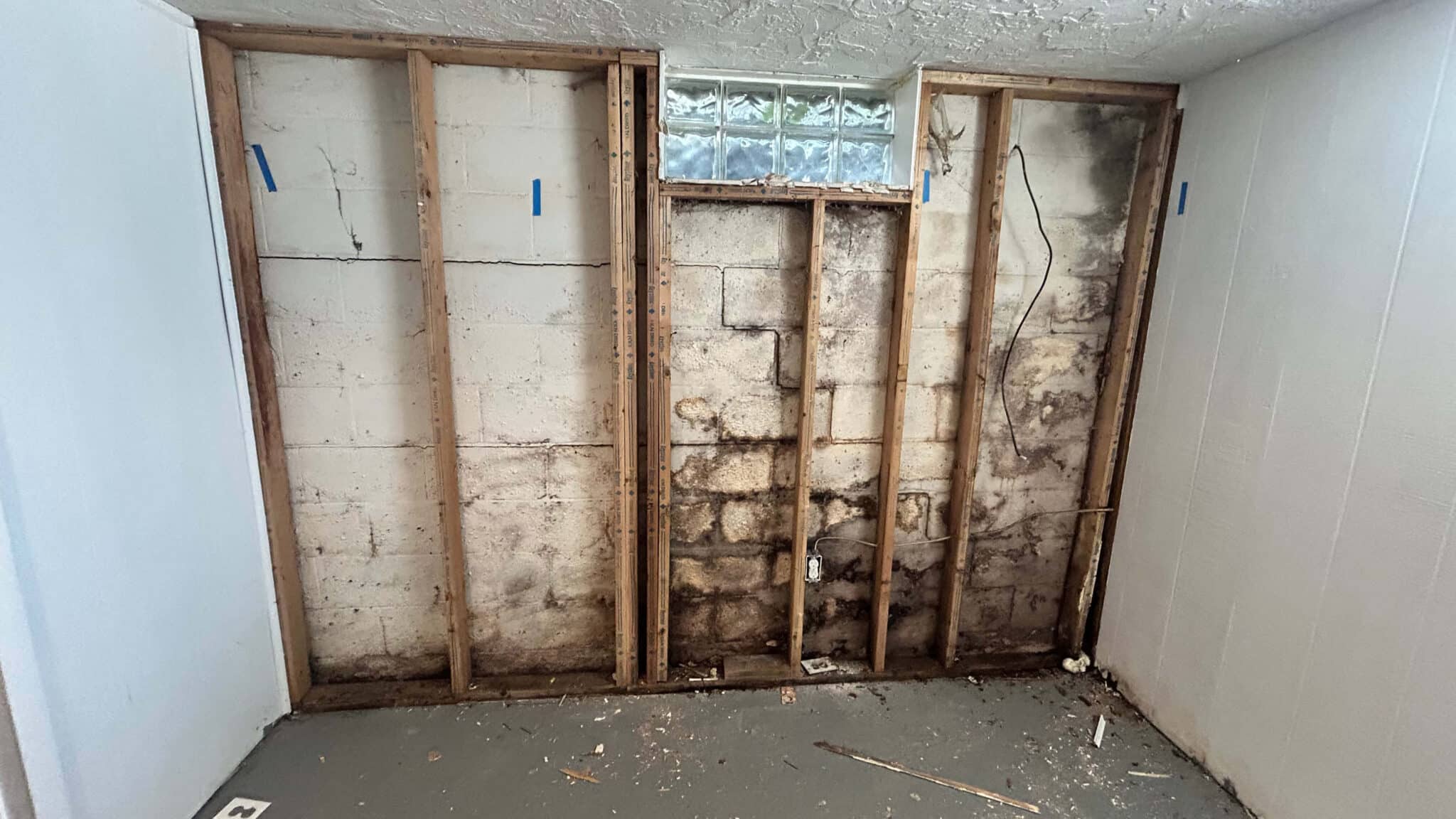
Why Mold Hides Behind Finished Basement Walls
Finished basements in Columbus trap moisture between the concrete foundation and interior drywall. The vapor has nowhere to go. Paper-faced drywall becomes a food source, and colonies spread for months before the first stain appears on the painted surface. By the time homeowners notice discoloration, the wall cavity is typically 70–80% colonized.
How iDry finds it: FLIR thermal cameras detect temperature differentials caused by moisture behind walls. Calibrated pin and pinless moisture meters confirm readings at every suspect point. This non-destructive approach maps the full scope before any drywall is cut — saving homeowners from unnecessary demolition.

Ceiling Mold From Roof Leaks and Attic Condensation
Ceiling stains that darken over weeks are almost never just water marks. In Central Ohio two-story homes, warm air rises into cold attic cavities and condenses on roof sheathing. That moisture drips onto the top side of ceiling drywall and feeds mold that grows downward. The patch you see on the ceiling is the bottom layer of a colony that extends upward into the attic framing.
What remediation involves: Containment of the room below, removal of affected ceiling drywall, HEPA scrubbing of the attic cavity, antimicrobial treatment of sheathing, and correction of the ventilation or leak that caused the moisture. Attic fan rerouting to an exterior soffit vent is the most common fix in Westerville and Dublin homes from the 1990s.

Basement Wall-Floor Joint: The Most Common Columbus Mold Location
The joint where basement walls meet the floor slab is the #1 mold location in Franklin County homes. Central Ohio’s clay soil swells during rain and pushes groundwater against the foundation. Water seeps through the cold joint — the gap between the footing and the wall — and wicks into carpet, tack strip, and baseboards. Mold begins growing within 48 hours.
Why this keeps recurring: Bleach cleaning kills surface mold but cannot reach hyphae rooted in concrete pores. The wall-floor joint continues wicking moisture after every rain. Permanent repair requires removing finished materials 12–18 inches above the waterline, applying antimicrobial sealant, and installing interior drainage or a dehumidifier rated for the square footage. Most Columbus homes need 70-pint capacity or higher.
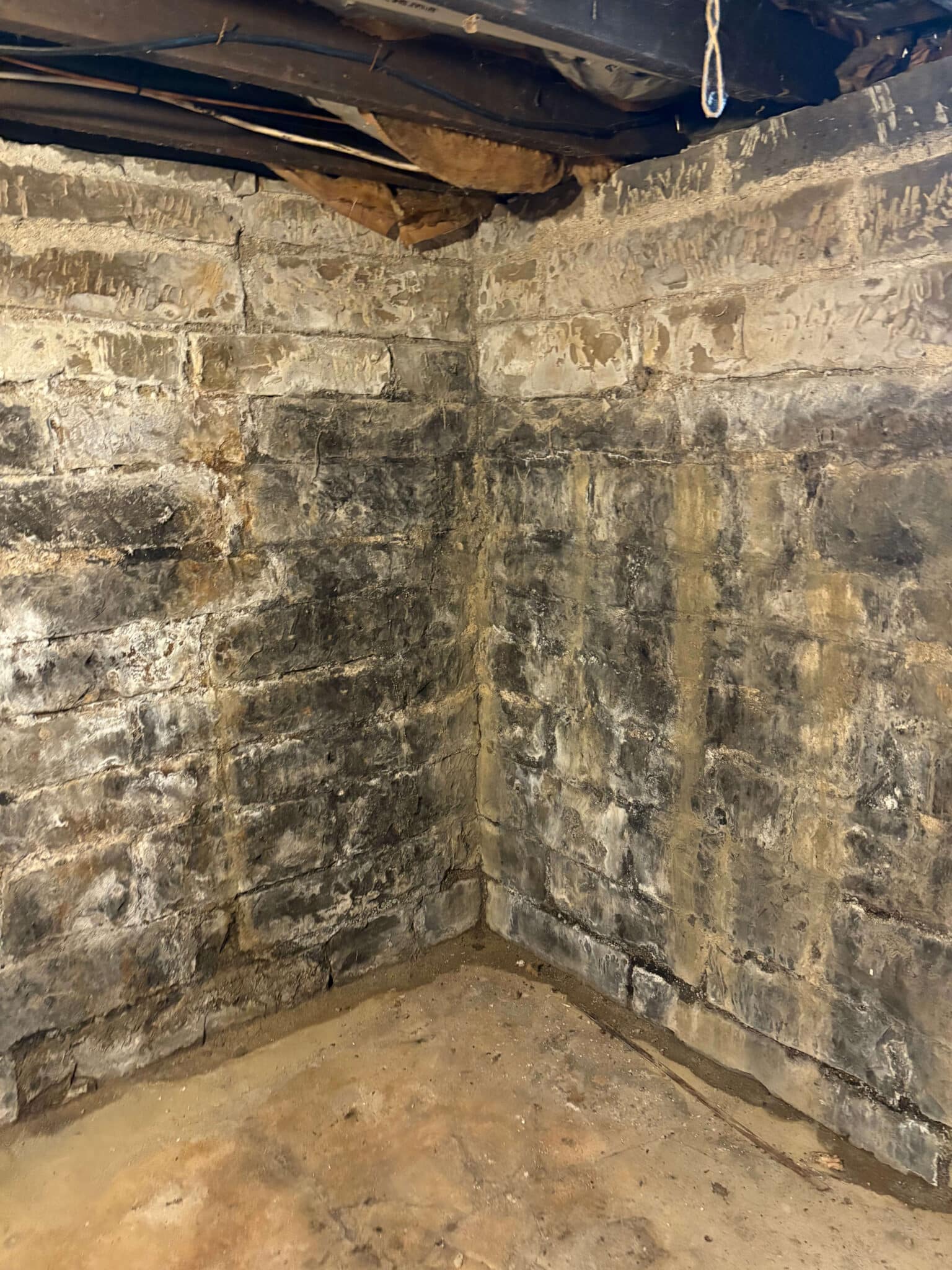
Efflorescence vs White Mold: How Columbus Homeowners Tell the Difference
White powdery deposits on stone or block basement walls panic homeowners, but half the calls iDry gets for “white mold” turn out to be efflorescence — harmless mineral salts left behind when water evaporates from masonry. The quick test: efflorescence dissolves in water and crumbles between your fingers. White mold smears, smells musty, and grows on organic materials like wood and drywall rather than bare stone.
When it matters: German Village row houses and Old Town East homes built on limestone block are the most common misidentification sites in Columbus. A professional assessment with a moisture meter and surface sampling saves thousands in unnecessary remediation. If it is mold, containment and HEPA filtration are required because Aspergillus and Penicillium species present as white colonies before darkening.
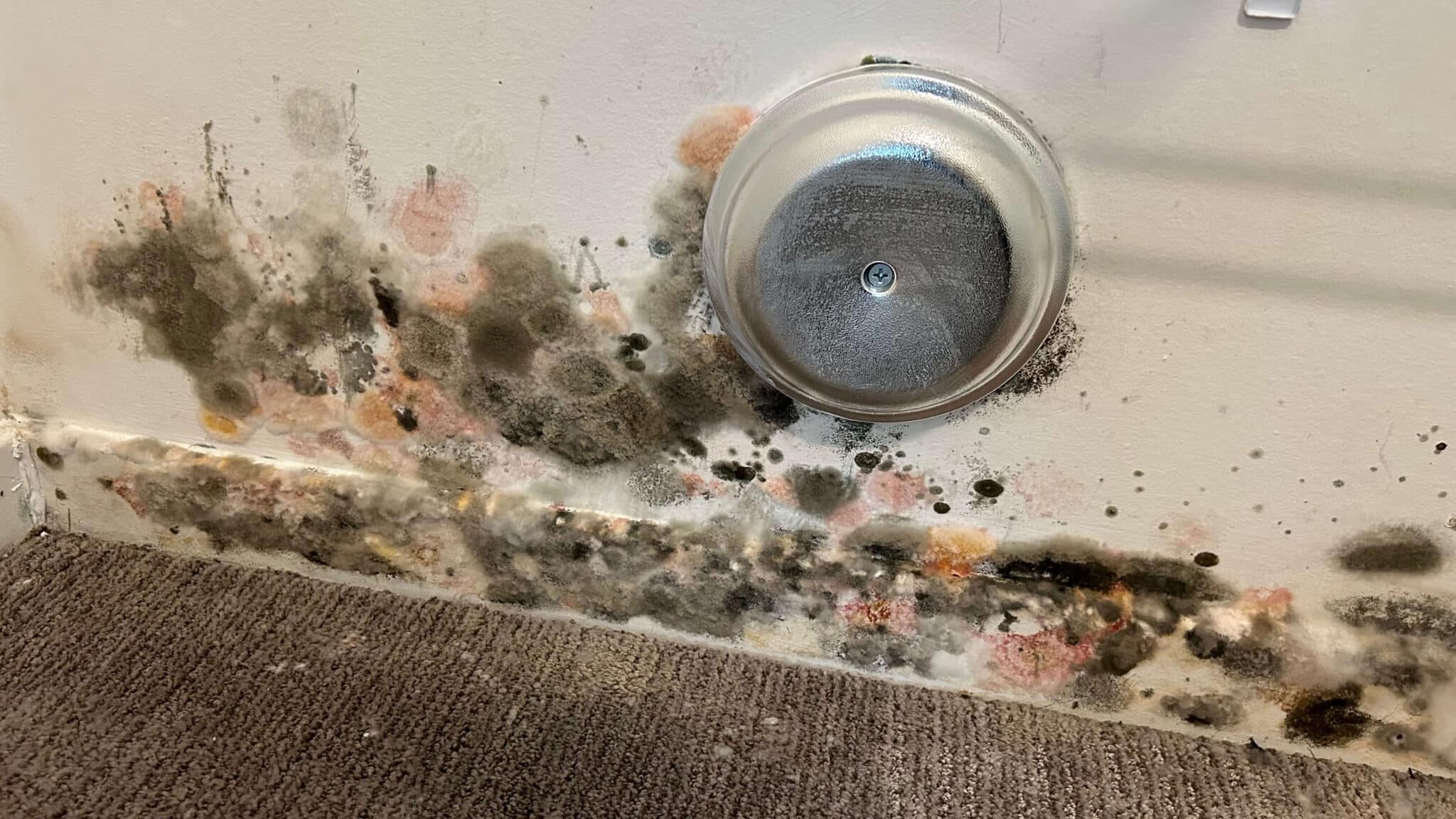
Multiple Mold Species on One Surface: What It Tells a Remediator
When green Penicillium, black Stachybotrys, and white Aspergillus colonize the same drywall section, the moisture source has been active for months — typically 90+ days. Each species thrives at a different humidity level, so multi-species growth means the environment has cycled through varying moisture conditions. This rules out a one-time leak and points to a chronic source: condensation, ongoing seepage, or a hidden plumbing failure.
Remediation approach: Multi-species contamination requires the highest containment protocol under IICRC S520. Double-layer poly barriers, negative air machines exhausting outdoors, full PPE for the crew, and removal of all porous materials within the affected zone — not just the visibly colonized surface. Air clearance testing after remediation must show spore counts below outdoor ambient levels before the space is released.

HVAC Mold: Why Duct Cleaning Alone Fails
Mold inside ductwork turns the HVAC system into a distribution network for spores. Every time the blower kicks on, contaminated air reaches every room in the house. Columbus homes with oversized AC units cycle too frequently, creating condensation inside supply ducts that feeds mold growth year-round. The visible buildup inside the duct is often just the beginning — the coil housing and drain pan are usually worse.
Why cleaning fails: Duct cleaning removes surface deposits but cannot reach mold rooted in fiberglass duct liner or the coil assembly. Professional HVAC mold remediation requires isolating the system, removing contaminated liner sections, treating the coil with antimicrobial solution, and fixing the condensation issue that caused the growth. A dehumidifier rated for the home’s square footage is usually part of the permanent fix.
See more documented Columbus restoration work: Free Restoration Photos
The Professional Mold Remediation Process — Six Steps, Start to Finish
IICRC S520 protocol. Six steps. Every job documented for your insurance adjuster. This is the mold remediation process iDry Columbus follows on every residential and commercial project.
Mold Inspection — Thermal Imaging and Moisture Mapping
Hidden moisture gets found first. FLIR thermal cameras reveal mold behind walls and under floors that visual inspection misses. Calibrated pin and pinless moisture meters confirm readings at every suspect location. The inspection maps the full scope before any material is touched.
Containment and Negative Air Pressure
Spore spread stops here. Plastic sheeting seals the affected area from the rest of the property. Negative air pressure machines force contaminated air out through HEPA filters — not into clean rooms. This step protects your family and your belongings during removal.
HEPA Air Scrubbing and Spore Capture
Airborne spores get captured. Air scrubbers with HEPA filters run continuously during the entire remediation. These machines capture mold spores down to 0.3 microns — removing them from the air before they settle on clean surfaces.
Mold Removal — Contaminated Material Extraction
Contaminated materials come out safely. Drywall, insulation, carpet, and wood framing with active mold get removed and double-bagged. Non-porous surfaces are cleaned with antimicrobial solutions. Every step follows IICRC S520 rules.
Moisture Source Repair and Prevention
The root cause gets addressed. Mold returns when moisture persists. Crawl space drainage, basement waterproofing, plumbing repairs, structural drying, or better ventilation — the fix depends on what the inspection found. Every job ends with a written moisture control plan that documents the repair and sets humidity targets for the space. No mold remediation contractor worth hiring skips this step.
Post-Remediation Clearance Testing
Independent lab results confirm the work. A third-party testing company — not iDry — collects air samples and surface swabs after the work is done. Lab results confirm colony forming unit (CFU) counts are at or below outdoor ambient levels and indoor air quality meets safe thresholds. The clearance report is your proof the job was done right — and the document your insurance adjuster needs to close the claim.
Mold Remediation in Action — Columbus Projects
Two documented jobs from this team. Every iDry Columbus mold project is photographed and logged from first inspection through final clearance testing.

The homeowner noticed a musty smell for months but saw no visible mold. Moving a bookshelf during a renovation revealed a colony covering the wall from baseboard to well above the 4-foot line — the growth had spread far higher than typical ground-moisture patterns. Thermal imaging mapped additional hidden growth behind the adjacent wall. Total remediation scope: full containment, removal of all affected drywall to the full height of visible and mapped damage, HEPA scrubbing, antimicrobial treatment, and moisture source correction at the foundation to prevent regrowth.
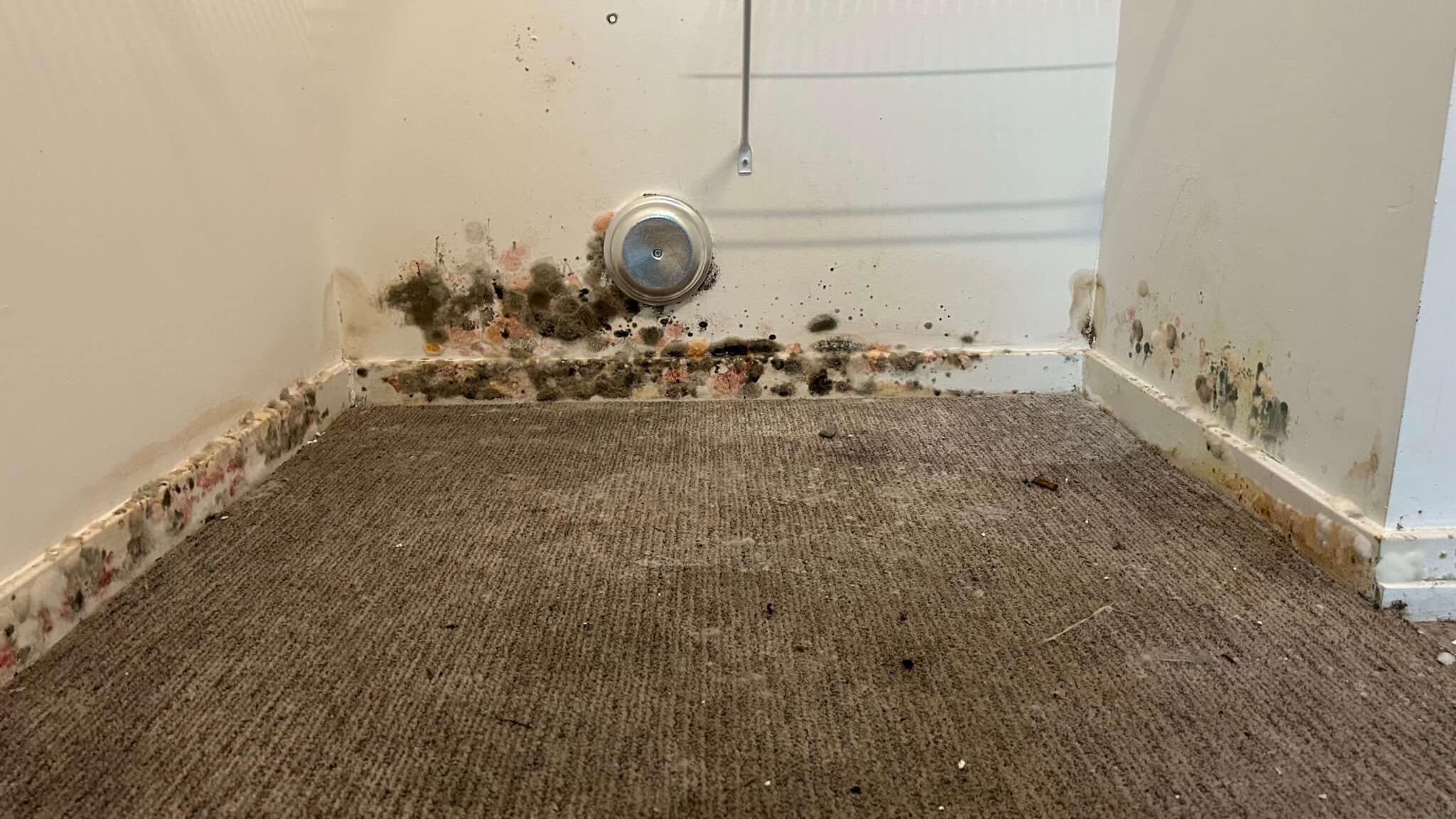
The homeowner reported a musty smell in the hallway but couldn’t find the source. Thermal imaging traced elevated moisture through the wall to a slow leak on the toilet supply line located on the opposite side. By the time the closet was opened for inspection, mold had colonized the floor and was climbing the drywall. The leak had been feeding moisture into the wall cavity for months. Remediation included full removal of contaminated materials from the closet, repair of the supply line, cavity dry-out with commercial dehumidification, HEPA scrubbing, and antimicrobial treatment before rebuild.
Basement mold is Columbus’s most common call. Finished basements built on clay soil trap moisture between the concrete foundation and interior walls. Homes in Clintonville, German Village, Upper Arlington, and Bexley — many built before modern waterproofing standards — account for the majority of basement mold remediation work across Franklin County.
Why Columbus Properties Grow Mold — Local Conditions That Drive Every Call
Columbus mold problems are rarely random. Most calls come from the same repeat conditions: heavy clay soil, long humid stretches, aging waterproofing, hidden condensation, and water damage that was not dried fast enough.
Heavy Clay Soil
Central Ohio clay holds water against basement walls for days after rain. That pressure pushes moisture through block walls and floor joints, especially in Clintonville, German Village, and Bexley homes.
High Summer Humidity
From May through September, indoor humidity above 60% becomes a mold risk factor. Basements and crawl spaces often stay above that threshold for weeks, creating ideal conditions for Cladosporium, Aspergillus, and Penicillium.
Older Construction
Pre-1970 homes in Upper Arlington, Worthington, and German Village were built before modern vapor barriers and waterproofing were standard. Moisture intrusion becomes a recurring problem as foundations age.
Condensation You Don’t See
Seasonal temperature swings create condensation on attic sheathing, crawl space framing, and cold basement surfaces. That is why attic mold can grow for months before the smell reaches the living space.
Water Damage Left Too Long
A burst pipe, appliance leak, or water damage event that sits for 48 hours can turn into a mold remediation project fast. Prompt extraction and structural drying are what stop that escalation.
Mold Remediation Cost in Columbus, Ohio
Cost depends on scope — not just square footage. Whether the job is a targeted mold cleanup or full-scale mold mitigation, the type of mold, location within the property, extent of moisture damage, and materials affected all factor into the final number. Most Columbus residential mold jobs fall into one of three tiers.
Small Area Remediation
$1,500–$4,000
Single room, localized growth on drywall or ceiling. Containment, removal, antimicrobial treatment, and clearance testing. Common in bathroom walls, under kitchen sinks, and around window frames in older Columbus homes.
Moderate Remediation
$4,000–$8,000+
Multiple rooms or structural involvement. Basement wall remediation with waterproofing, crawl space containment, or attic sheathing treatment. Includes moisture source repair and full clearance testing.
Large-Scale Remediation
$8,000–$15,000+
Whole-basement or multi-area contamination. Extensive structural material replacement, HVAC decontamination, and full-property moisture control. Common in homes with long-term undetected leaks or water damage from burst pipes or flooding. Commercial properties typically fall in this tier or higher.
Insurance coverage varies by policy and cause. Mold from a sudden pipe burst or sewage backup is typically covered. Mold from long-term humidity or deferred maintenance usually is not. iDry documents every job with timestamped photos and moisture readings that insurance adjusters need for claim processing. Learn about mold insurance coverage.
Why Columbus Homeowners Choose iDry for Mold Remediation
30 Years in Columbus — Not a Franchise
Owner-operated since 1995. Curtis Teets supervises every mold job from thermal imaging inspection to clearance testing. No call centers, no dispatch delays, no subcontractors you’ve never met.
IICRC S520 on Every Job
Full containment, HEPA filtration, safe material removal, moisture source repair, and third-party clearance testing that verifies indoor air quality before the space is released. The same protocol on a $2,000 bathroom job and a $15,000 basement.
Thermal Imaging — Not Guesswork
FLIR cameras and calibrated moisture meters map every colony — visible and hidden — before a single piece of drywall is touched. You see the scope before work starts, not after the bill arrives.
Insurance-Ready Documentation
Timestamped photos, moisture readings, material inventories, and daily progress reports from day one. Adjusters get exactly what they need. iDry has handled insurance claims across every major Ohio carrier for three decades.
What Columbus Homeowners Say About iDry
-
Kendra Turner ★★★★★
iDry Columbus went above and beyond for my family when we had a water emergency. They responded quickly, communicated clearly through the whole process, and left our home in great shape. Curtis and the team treated us like family — not just another job.
-
David Warner ★★★★★
The way Curtis and his crew handled our situation was old school in the best way — honest, respectful, and thorough. They cleaned out years of buildup without judgment and left the property ready for renovation. Communication was clear from start to finish.
-
Stacy Connelly ★★★★★
We had a mold problem in our basement that two other companies failed to fix properly. iDry came in, identified the source of moisture, and remediated everything correctly. The musty smell is completely gone and the basement is dry. Professional, on time, and fair pricing.
Mold Remediation Service Areas — Columbus, Ohio
Thirty years across every Columbus neighborhood. Each area has different housing stock, soil conditions, and mold risk factors. That local knowledge shapes every assessment. See our Columbus Neighborhood Mold Risk Index for a full breakdown by area.
Pre-1940s homes with limestone and block foundations. Heavy clay soil holds water against walls for weeks. Basement mold is the most common call from this neighborhood.
Historic limestone foundations wick moisture directly into basement walls. Heritage compliance adds remediation complexity. Thirty years of work in this district means no surprises.
1950s–70s colonials with poured concrete basements. Hairline foundation cracks develop over decades and seep water slowly — feeding hidden mold behind finished basement walls.
1980s–2000s homes with crawl spaces over clay soil. Inadequate vapor barriers and bathroom exhaust vented into attics create dual mold risk — below and above the living space.
Newer construction with finished basements. Water intrusion through window wells and sump pump failures drive most mold calls. Crawl space moisture from clay subsoil is a secondary factor.
1970s–90s homes with aging HVAC systems. Condensation in ductwork and on cold-water pipes creates hidden moisture sources that feed mold growth in wall cavities and utility closets.
60-minute dispatch from our Columbus headquarters. We also serve the metro for water damage restoration and odor removal.
Mold Remediation Resources for Columbus Homeowners
Each page below covers a specific mold topic in depth. Start with the one that matches your situation — or call 614-810-0000 for direct guidance.
-
Cost Guide
Mold Remediation Cost in Columbus — Full Guide
Price ranges by project size, what drives the number up or down, and how insurance coverage works for Columbus mold jobs.
-
Black Mold
Black Mold Removal in Columbus, Ohio
Not all dark mold is Stachybotrys. A professional assessment determines the species and the right removal approach.
-
Basement
Basement Mold Remediation — Columbus
Clay soil, aging foundations, and finished basements that trap moisture. Basement mold remediation covers the full scope.
-
Crawl Space
Crawl Space Mold Remediation — Columbus, Ohio
Up to 50% of indoor air comes from below the living space. Crawl space remediation addresses the source most homeowners never see.
-
Testing
Mold Testing and Inspection — Columbus
Mold testing and remediation work together. Pre-remediation testing identifies the species and scope. Post-remediation testing confirms the job is done. Both protect your investment.



Mold Remediation Questions Columbus Homeowners Ask
Direct answers to the questions this team hears every week from Columbus homeowners dealing with mold.
What is mold remediation and how is it different from mold removal?
Mold remediation includes inspection, containment, HEPA filtration, safe removal, and moisture source repair — not just ripping out visible mold. You may also hear it called mold abatement or mold mitigation — the scope is the same. Removal addresses what you see. Remediation addresses why it grew, restores indoor air quality, and prevents recurrence. Columbus properties need remediation because clay soil and humidity create persistent moisture conditions. Call 614-810-0000 for a free assessment.
How much does mold remediation cost in Columbus, Ohio?
Most Columbus mold remediation projects range from $1,500 to $9,000 depending on the affected area, type of mold, and scope of moisture source repair. Basement and crawl space jobs in Central Ohio average $3,000–$5,000. iDry Columbus provides free estimates with same-day scheduling. See our full cost breakdown or call 614-810-0000.
How long does the mold remediation process take?
Small projects take 1–3 days. Moderate jobs with structural work take 3–5 days. Large-scale remediation across multiple areas can take 5–10 days. That timeline covers containment, removal, drying, and third-party clearance testing. Most Columbus basement mold jobs land in the 3–5 day range. iDry Columbus offers same-day assessments so the clock starts fast. Call 614-810-0000 to schedule yours.
Does homeowners insurance cover mold remediation?
Coverage depends on the cause. Mold from a sudden pipe burst or appliance leak is typically covered. Mold from long-term humidity, deferred maintenance, or flooding usually requires a separate policy. iDry Columbus documents every job with timestamped photos and moisture data that adjusters need. Learn more about insurance coverage.
When is professional mold remediation required?
Professional remediation is recommended when mold covers more than 10 square feet, grows inside walls or HVAC systems, appears after water damage, or returns after DIY cleaning. Columbus homes with persistent musty odors in basements or crawl spaces almost always need professional assessment. Call 614-810-0000 for a free inspection.
What should I throw out after finding mold?
Porous materials with active mold growth — drywall, carpet, insulation, ceiling tiles, and upholstered furniture — typically cannot be saved. Non-porous surfaces like metal, glass, and hard plastic can be cleaned. Columbus homeowners often discard items that could have been salvaged. A professional assessment from a local crew determines what needs removal versus cleaning. Call 614-810-0000 before discarding anything.
How do I know if I need mold remediation or can handle it myself?
Small surface mold on tile — under 10 square feet — can often be cleaned with household solutions. Mold inside walls, in HVAC systems, or past 10 square feet needs professional containment and HEPA filtration. Columbus clay-soil basements hide mold behind finished walls that DIY methods miss. Prevention tips help after the job is done.
What does the mold remediation process look like step by step?
Thermal imaging inspection maps the scope. Containment barriers isolate the area. HEPA air scrubbers filter spores during removal. Contaminated materials are safely extracted. The moisture source is repaired. A third-party lab runs clearance testing to confirm safe spore levels. Every iDry Columbus job follows this IICRC S520 protocol. Call 614-810-0000.
Is mold remediation safe for my family?
Professional remediation protects occupants. Containment barriers and negative air pressure keep spores out of clean areas. HEPA filtration runs the whole time. Most Columbus families stay in the home — the affected area is sealed off. After remediation, moisture control measures are in place to prevent regrowth. Your iDry Columbus crew goes over safety steps before work starts.
Who pays for mold remediation — me or my insurance?
It depends on your policy and the mold's cause. Sudden water damage (burst pipe, appliance failure) often triggers coverage. Long-term humidity or neglect typically does not. Many Ohio policies include mold coverage limits of $5,000–$10,000. iDry provides documentation that supports claim filing. Read more about insurance.
Free Mold Remediation Estimate — Columbus, Ohio
Same-day scheduling. No obligation. Tell us about your situation and a Columbus mold specialist will contact you within the hour.
Prefer to talk now? Call 614-810-0000 — available 24/7.