
Family owned & operated · 30 years in Columbus restoration.
Ice Dam & Ceiling Water Damage in Columbus: Dried Fast, Repairs Lined Up
Water dripping from your ceiling after snow is usually an ice dam: melting snow backs up behind ice at the roof edge and leaks into the attic. In Columbus, iDry answers 24/7, dries out the attic, ceiling and walls, and brings in our reconstruction and roofing partners for the repairs.

Ceiling and ice dam water damage repair for Columbus homes. Serving Clintonville, Upper Arlington, Westerville, Dublin, Worthington, Hilliard, and all of Franklin County for 30 years. Call 614-810-0000 and we dispatch in 60 minutes.
Why Your Ceiling Leaks After Snow, and What It Means for Your Home
An ice dam is a ridge of ice at the roof edge that traps melting snow behind it. Heat escaping from the house warms the upper roof, so the snow there melts. The water runs down and refreezes at the colder eaves. The pond that builds up behind the ice works under the shingles and drips into the attic, the insulation and the ceiling below.
Columbus’s normal January low at the airport, against a normal high of 37°F. Nights below freezing refreeze meltwater at the cold eaves, which is how ice dams grow.
A normal Columbus January has everything an ice dam needs. January brings about 9.5 inches of snow in a normal year, by National Weather Service records. Snow sits on the roof while warm air from the house leaks into the attic underneath it.
Some homes leak far more heat into the roof than others. Ceiling light fixtures, attic hatches and bath fans let warm air leak into the attic. Chimneys, leaky ducts in the attic and knee walls add heat too, according to University of Minnesota Extension. That’s why one house on a street drips while the next stays dry.
Signs the water is from an ice dam:
- A drip or stain near an outside wall or along the top of a wall after snow
- Thick icicles and a ridge of ice along the gutters
- Water at the top of a window frame or running down inside a wall
- A stain spreading along drywall seams or into a ceiling corner
- Damp, matted insulation near the eaves in the attic
Waiting for spring makes the repair bigger. Wet insulation stops insulating and holds water against the drywall. A ceiling that stays wet can sag, stain and grow mold, which is why University of Minnesota Extension advises drying the wet parts of the house right away.
Water dripping right now? Five things to do first
- Catch the water. Put a bucket or tote under each drip and lay towels around it. Move furniture, rugs and electronics out of the wet area.
- Stay out from under a sagging ceiling. A bulging ceiling can be holding a lot of water. Keep people and pets out of that room until we get there.
- Cut the power if water reaches a fixture. If water is coming through a light or near outlets, switch that circuit off at the breaker. Never touch wiring while standing in water.
- Photograph everything. Take photos and video of the ceiling, the walls and the icicles at the roof edge, from the ground, before anything gets moved. Your claim starts with these.
- Stay off the roof. Don’t chip, shovel or torch the ice. It damages shingles, and winter roof work is how people get hurt. Then call 614-810-0000.
How We Fix Ice Dam Ceiling Damage, Start to Finish
Six steps from the first call to a finished ceiling, all documented for your insurance company.

Answered and On the Way
A person answers 614-810-0000 day or night. We confirm your address and dispatch a crew within 60 minutes.
Drips Caught, Room Protected
We catch active drips, cover floors and furniture, and move what can be moved. If part of the ceiling is sagging, we make it safe before anything else.
Every Wet Spot Found
Moisture meters and thermal imaging trace the water from the attic insulation down through the ceiling, the wall cavities and the floor. The camera shows where to check, and the meters confirm what’s wet.
What Can’t Be Saved Comes Out
Soaked insulation and ceiling drywall that sags, crumbles or won’t dry are removed. Sound material stays and gets dried. Every cut is photographed for your adjuster.
Dried to Normal Readings
Dehumidifiers and air movers dry the attic, the ceiling and the walls. We track moisture readings through the job and call it dry when the meters say so. Antimicrobial treatment goes on where needed.
Rebuild and Roof Repair Lined Up
Our reconstruction partners replace the insulation and drywall and refinish the ceiling. Our roofing partners repair the outside damage, and we coordinate both so the work runs as one job.

Every reading goes in the file. You get the photos, the moisture readings and the drying log, the same record your adjuster sees. Our moisture meter readings chart explains what the numbers mean.
The Roof and the Inside, Handled With One Call
Ice dam damage is two repairs: the roof edge and everything under it. Our reconstruction partners rebuild the inside and our roofing partners take the shingles, flashing and gutters. We coordinate both, so one call starts it all.
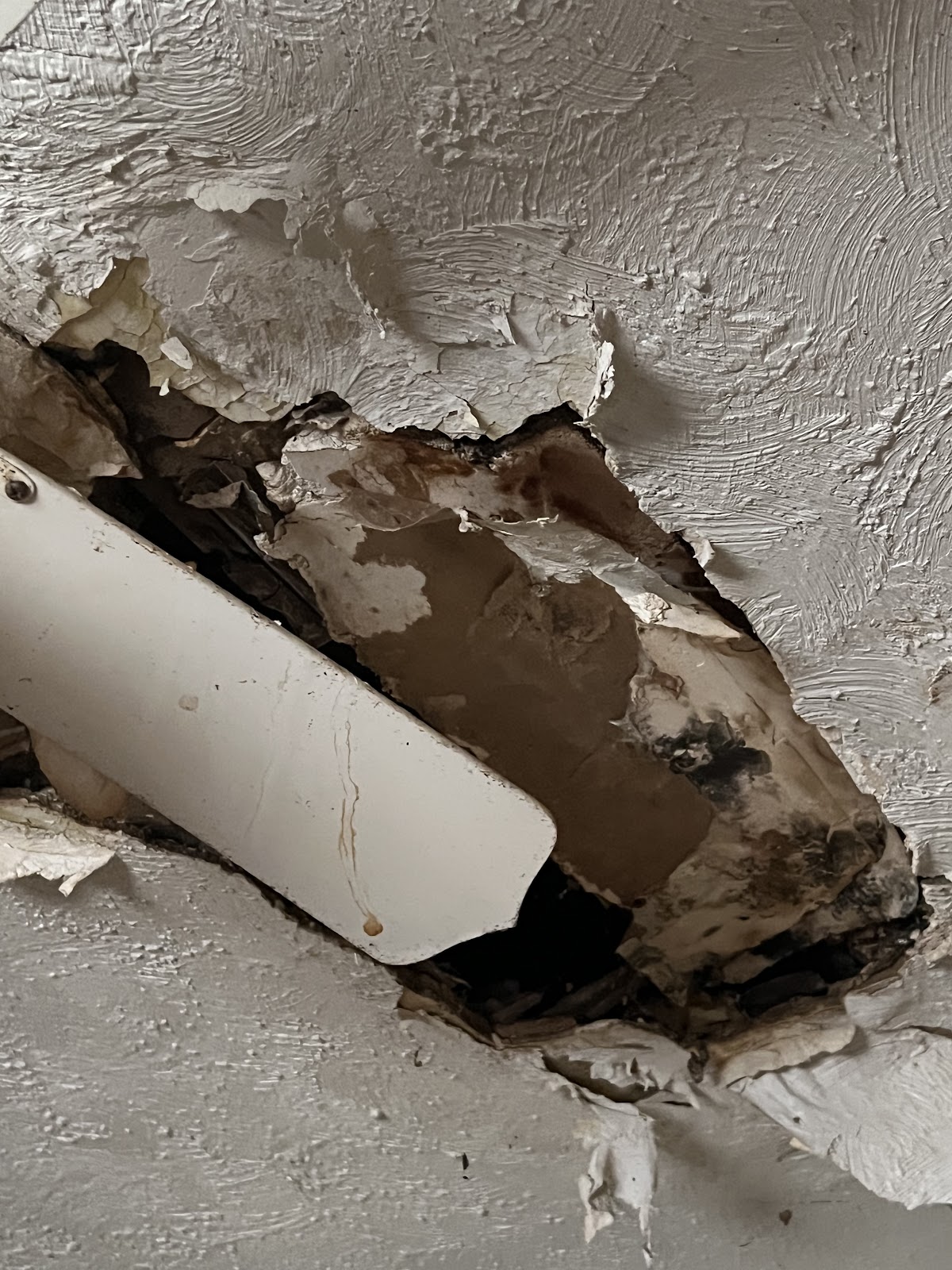
The lasting fix is in the attic, not on the roof. Ice dams start with heat escaping from the house. University of Minnesota Extension’s advice is to seal the air leaks into the attic first, then add insulation. Clearing ice treats the symptom.
Ventilation and drainage matter too. United Policyholders points to clear gutters, unblocked soffit vents and keeping snow off the lower three to six feet of the roof. Leave the ice itself alone.
If the attic stayed wet for weeks, check the wood too. Sheathing and rafters that stayed damp can grow mold on the underside of the roof. Our attic mold remediation crew removes it and treats the wood.
Is Ice Dam Damage Covered? Usually, If You Report It Fast
Ice dam water damage is generally covered when you report it promptly. That’s the guidance from the consumer group United Policyholders, as long as the damage isn’t due only to roof problems you already knew about. Your insurer makes the final call.
What Ice Dam Water Usually Damages
- Water damage to ceilings and walls
- Wet attic insulation
- Damage to the roof structure
Where Insurers Push Back
- Roof damage they say existed before the ice dam
- Paying depreciated value instead of replacement cost
- The scope and cost of the repairs
- Whether new roofing has to match the old
We document the claim from the first visit. Photos, moisture readings and drying logs go to you and your adjuster. Our insurance claim guide walks through every step of filing.
What Drives the Cost of Ice Dam Ceiling Repair
The cost comes down to how far the water traveled and how long it sat. We price your job after we’ve measured the moisture, so the number reflects your home. For a sense of ranges first, see our wall water damage costs guide.
| Factor | Effect on cost | Why |
|---|---|---|
| How long the water came in | The biggest factor | A drip caught on day one wets a small patch. Days of leaking soak the insulation, the drywall and the wall cavities. |
| How far it spread | Each layer adds work | Attic, ceiling, walls and floors each need their own removal and drying. |
| Ceiling type and finish | Older finishes take longer | Plaster and textured ceilings take more work to repair and match than flat drywall. |
| Insulation | Wet insulation is replaced | Loose-fill and batts both lose their value once soaked, and the amount drives the cost. |
| Mold | Adds remediation | Growth that started before drying adds removal and treatment of the affected materials. |
| Outside damage | Shingles, flashing, gutters | Our roofing partners repair it, sized by what the ice damaged. |
What Columbus Homeowners Say About iDry
-
Kendra Turner ★★★★★
iDry Columbus went above and beyond for my family when we had a water emergency. They responded quickly, communicated clearly through the whole process, and left our home in great shape. Curtis and the team treated us like family — not just another job.
-
David Warner ★★★★★
The way Curtis and his crew handled our situation was old school in the best way — honest, respectful, and thorough. They cleaned out years of buildup without judgment and left the property ready for renovation. Communication was clear from start to finish.
-
Stacy Connelly ★★★★★
We had a mold problem in our basement that two other companies failed to fix properly. iDry came in, identified the source of moisture, and remediated everything correctly. The musty smell is completely gone and the basement is dry. Professional, on time, and fair pricing.
More Help With Winter Water Damage
More winter help: attic mold, burst pipes and filing the claim. Call 614-810-0000 anytime.
- Mold
Mold in a Wet Attic
Insulation and roof sheathing that stayed wet can grow mold. See how we find it and remove it.
- Water Damage
Frozen and Burst Pipes
The other winter leak. What to do in the first hour and how the cleanup works.
- Insurance
Filing a Water Damage Claim
A step-by-step guide to documenting the damage and working with your adjuster.



Ice Dam and Ceiling Water Damage: Your Questions Answered
What Columbus homeowners ask when water comes through the ceiling in winter.
Is water coming through my ceiling after snow from an ice dam?
Most likely, if the drip is near an outside wall and you see icicles or a thick ridge of ice at the gutters. Melting snow backs up behind the ice and leaks into the attic. A plumbing leak can look similar, so we trace the source first.
What should I do first when water drips from the ceiling?
Put a bucket under the drip, move furniture and electronics away, and keep everyone out from under any sagging section. If water is near a light fixture, shut that circuit off at the breaker. Take photos for your claim, stay off the roof, and call 614-810-0000. We answer 24/7.
Does homeowners insurance cover ice dam water damage in Ohio?
Generally, yes. United Policyholders says ice dam water damage is usually covered when you report it promptly. The exception is damage due only to roof problems you already knew about. Disputes tend to involve depreciation and scope. Your insurer makes the final call, and we document what your adjuster needs.
Can a wet ceiling be saved, or does it have to be replaced?
It depends on the material and how long it stayed wet. Drywall that sags, crumbles or won’t dry comes out. Drywall that stays firm and dries to normal readings can often stay. Soaked, matted insulation gets replaced. We test with meters before deciding and photograph every section we remove.
How long does it take to dry an attic and ceiling?
Usually several days, depending on how much water got in, how long it sat and whether it reached the walls. We track moisture readings through the job and finish when the materials reach normal levels, not on a set schedule. Our drying time estimator gives you a rough range for your home.
Will wet attic insulation cause mold?
It can. Wet insulation holds moisture against the ceiling drywall and the roof sheathing, and mold needs moisture, something to feed on and time. University of Minnesota Extension advises drying wet areas right away. We remove soaked insulation, dry the framing and sheathing, and apply antimicrobial treatment where needed.
Should I knock the ice dam off my roof?
No. United Policyholders warns against using a shovel, snow blower or blowtorch to chip, break or melt an ice dam. University of Minnesota Extension adds that winter roof work risks injury and roof damage. Put a bucket under the drip, call us, and our roofing partners repair any roof damage the ice left.
Who repairs the roof after an ice dam?
Our roofing partners do, and we set it up for you. iDry assesses, dries and removes the damaged materials inside, then brings in our reconstruction partners for the rebuild and our roofers for the shingles, flashing or gutters. You make one call, and we coordinate the rest.
How do I keep ice dams from coming back?
Fix the heat loss. University of Minnesota Extension recommends sealing the air leaks from the house into the attic first, then adding insulation, since escaping heat is what melts the roof snow. Clear gutters, unblocked soffit vents and less snow on the lower edge of the roof also help, per United Policyholders.
Do you work in my part of Columbus?
Yes. We serve Columbus and all of Franklin County, including Dublin, Hilliard, Westerville, Gahanna, Reynoldsburg, Grove City, Upper Arlington, Bexley and New Albany. Our standard is a crew dispatched within 60 minutes inside the Columbus metro, at any hour of the day or night.
Get a Free Ceiling Water Damage Assessment
Tell us what’s happening and we’ll call you back. If water is coming through right now, call 614-810-0000. It’s the fastest way to get a crew moving.
Ice Dam Water Damage Repair Across Columbus and Franklin County
We cover all of Franklin County and the surrounding suburbs. We answer day or night, all winter long.