
HVAC Mold Remediation Columbus Ohio
Mold inside your air handler spreads to every room every time the system runs. iDry Columbus treats the source — air handler housing, coil enclosure, plenum, and accessible duct openings — with full containment and EPA-registered antimicrobials. Free inspection. Written scope before any work begins.

Why HVAC Mold Is a Whole-Home Problem
Most mold stays where it grows. HVAC mold is different — your air handler turns a contained problem into a distributed one, delivering spores to every room every time the system cycles. It's part of a broader mold remediation picture we address from source to structure.
Condensation Is Constant
The evaporator coil runs below dew point for hours every day in Columbus summers. Moisture accumulates on coil fins, in the drain pan, and on surrounding insulation — the same humidity patterns that drive basement mold in Columbus also feed HVAC growth.
Spores Go Everywhere
An air handler moving 400–2,000 cubic feet per minute turns mold at the coil into airborne exposure in the living room, bedrooms, and kitchen simultaneously. Occupants breathe mycotoxins continuously while the system runs.
Columbus Humidity Accelerates It
The Ohio River Valley humidity corridor means Franklin County homes maintain elevated indoor relative humidity from April through October. Oversized or short-cycling AC equipment — common in older Clintonville and Worthington homes — never fully dries the coil between cycles.
Signs Your HVAC Has a Mold Problem
These are the signals that typically precede a confirmed HVAC mold finding. If two or more are present, treat it as a likely positive until inspected.
Musty Smell When System Runs
Odor appears specifically when the HVAC cycles on and disappears when it's off. This is the clearest single indicator of mold at or near the air handler or coil.
Visible Growth at Supply Vents
Dark discoloration — black, green, or gray — on or around supply registers or inside the air handler cabinet. Growth at multiple vents simultaneously indicates mold at the source, not isolated locations.
Worsening Respiratory Symptoms
Allergy symptoms, coughing, or headaches that improve significantly when occupants leave the home for a day or more. Symptoms may worsen in rooms with the most airflow from supply registers.
Recent Water Intrusion Near Unit
A clogged condensate drain, nearby pipe leak, or flooding event that reached the air handler. Water exposure accelerates mold establishment in the coil housing — schedule a free mold inspection within 48 hours of any moisture event involving the HVAC.
What iDry Treats — and What Duct Cleaners Do
Most Columbus homeowners don't know these are two separate scopes requiring different specialists. Here's the honest breakdown.
Mold Remediation at the Source
- Air handler housing — interior cabinet surfaces
- Evaporator coil housing and drain pan
- Supply and return plenum
- Accessible duct openings (first 12–18 inches)
- Surrounding drywall, framing, and insulation
- Full containment + negative air pressure
- HEPA air scrubbing during remediation
- EPA-registered antimicrobial treatment
Interior Ductwork Cleaning
- Interior duct surfaces — full length
- Mechanical brushing + negative pressure vacuum
- Register and grille cleaning
- Blower wheel and fan cleaning
After iDry completes remediation, we coordinate with our Columbus duct cleaning partner, Air Duct Cleaning Columbus, to complete the interior ductwork scope. Both services are typically needed for a complete resolution — we'll tell you exactly what applies to your situation before any work begins.
When HVAC mold affects a Columbus commercial building, the remediation scope is different — containment must account for occupied floors and HVAC lockout coordination across active work areas. See our full guide to commercial mold remediation in Columbus.
HVAC Mold Remediation — Step by Step
Every HVAC mold job follows the same sequence. No shortcuts, no skipped steps — especially containment before the cabinet is opened.
Inspection & Source Mapping
Thermal imaging identifies hidden moisture zones. Moisture meters confirm condensation patterns at the air handler, coil, drain pan, and surrounding structure. See how our mold inspection process works before we open the cabinet.
System Off — Containment First
The HVAC system is shut down before containment is set. Negative air pressure barriers prevent spore migration to adjacent areas when the air handler cabinet is opened. No exceptions to this sequence.
Physical Removal
Mold growth is physically removed from all accessible surfaces — housing panels, coil enclosure, drain pan, plenum, and accessible duct openings. HEPA vacuum during removal contains spore release.
EPA-Registered Treatment
All treated surfaces receive application of EPA-registered antimicrobials appropriate for HVAC environments — formulated to address Cladosporium, Aspergillus, and other species common to Columbus air handlers.
Structural Remediation if Needed
If mold has migrated to surrounding drywall, framing, or insulation, that scope is addressed in the same mobilization. We give you the full picture in the written scope before work begins — no add-ons mid-job.
Duct Specialist Coordination
We coordinate with a vetted Columbus duct cleaning specialist for interior ductwork if needed. One project manager. One scope. One timeline. You don't manage two contractors.
What HVAC Mold Remediation Costs in Columbus
Cost depends on how far the mold has migrated beyond the air handler. We give you the full scope and price before work begins — no estimates that expand after we're in the door.
| Scope | Typical Range |
|---|---|
| Air handler housing + accessible duct openings | $1,500 – $4,500 |
| + Surrounding drywall / framing / insulation | adds $1,500 – $4,500 |
| Multi-zone or whole-structure involvement | $6,000 – $12,000+ |
| Duct interior cleaning (referred specialist) | $300 – $800 separately |
Ranges reflect typical Columbus-area jobs. Scope determines cost — not square footage alone. Call 614-810-0000 for a free inspection and written scope before committing to anything.
Insurance Coverage
Coverage depends on cause. If HVAC mold resulted from a sudden covered water event — a burst pipe, appliance failure, or storm — most Columbus homeowners policies cover remediation.
Mold from long-term condensation buildup or deferred maintenance is typically excluded. See our full cost guide for what to expect with and without coverage.
Call us before filing. We document cause and scope to support your claim and can speak directly with your adjuster if needed.
614-810-0000What We Tell Every HVAC Mold Customer Upfront
We Don't Clean Ducts
We treat mold at the source. Interior ductwork cleaning requires different equipment and a different specialist. We'll tell you exactly what each scope requires — and coordinate the duct side for you — rather than pretending one contractor does everything.
We Don't Guess at Cause
Every HVAC mold job starts with identifying why the moisture got there — clogged condensate drain, oversized equipment, refrigerant undercharge causing coil freeze-thaw. Treating without fixing the source means treating twice. We find it before we quote it.
We Don't Start Without a Written Scope
The inspection is free. The scope is written. The price is fixed before a single panel comes off the air handler. Thirty years in Columbus — we've seen what "we'll figure it out as we go" costs homeowners. When HVAC mold tests as Stachybotrys, the stakes are higher and the protocol is different.
HVAC Mold Removal Across Central Ohio
We serve all of Franklin County and surrounding communities — same-day response, same written-scope standard everywhere.
HVAC Mold — Questions We Hear Every Week
Can mold grow in HVAC systems?
Yes. HVAC systems create ideal mold conditions — dark enclosures, condensation on coils, and organic dust accumulation. Cladosporium and Aspergillus are the most common species found in Columbus HVAC systems. Once established, the air handler distributes spores to every room in the house. Call iDry Columbus at 614-810-0000 for a free inspection.
What causes mold in HVAC systems?
The primary causes are condensation on the evaporator coil, a clogged condensate drain line that holds standing water, oversized AC equipment that short-cycles and never fully dries the coil, and high indoor humidity — a year-round challenge in Columbus given Ohio River Valley moisture patterns. iDry identifies the source before treatment.
Is HVAC mold dangerous?
HVAC mold is among the highest-risk mold scenarios because the air handler actively circulates spores to every room. Occupants breathe concentrated mycotoxins continuously while the system runs. Symptoms include worsening respiratory issues, allergy flare-ups, and headaches that improve when away from home. Don't run the system — call 614-810-0000.
What's the difference between HVAC mold remediation and duct cleaning?
Mold remediation treats the source — air handler housing, coil enclosure, plenum, and accessible duct openings — with EPA-registered antimicrobials after physical removal. Duct cleaning removes debris from interior ductwork using brushing and vacuum equipment. Both are often needed. iDry handles remediation; we coordinate with a vetted duct cleaning specialist for the interior ducts.
How much does HVAC mold remediation cost in Columbus?
Surface treatment of the air handler and accessible duct openings typically runs $1,500–$4,500 in Columbus. If surrounding drywall or framing is affected, costs range $3,500–$8,000+. Duct interior cleaning by a specialist is billed separately at $300–$800. iDry provides a written scope and price before any work begins. Call 614-810-0000.
Should I run my HVAC if there's mold?
No. Running a mold-contaminated HVAC distributes spores throughout every room of your home, dramatically increasing remediation scope and health risk. Turn the system off, close vents in unaffected rooms if possible, and call iDry Columbus at 614-810-0000. We respond same day throughout Franklin County.
How do I know if my HVAC has mold?
The clearest signs are a musty smell that appears only when the HVAC runs, visible dark growth around supply vents or inside the air handler cabinet, and allergy or respiratory symptoms that improve when the system is off. Thermal imaging and moisture meters let us confirm mold presence without destructive testing. Free inspection: 614-810-0000.
How long does HVAC mold remediation take?
A standard air handler housing and coil enclosure treatment takes one day. If surrounding structure requires remediation, plan for two to three days including drying time. Duct cleaning by a specialist typically adds a half day on a separate visit. iDry gives you a specific timeline in the written scope before work begins.
Does homeowners insurance cover HVAC mold?
Coverage depends on the cause. If mold resulted from a sudden, covered water event — a burst pipe or appliance failure — most Columbus homeowners policies cover remediation. Mold from long-term condensation or deferred maintenance is typically excluded. iDry documents cause and scope to support your insurance claim. Call 614-810-0000 before filing.
Does iDry clean the inside of ducts?
No. iDry treats mold at the source — the air handler housing, coil enclosure, plenum, and accessible duct openings. Interior ductwork cleaning requires specialized brushing and vacuum equipment operated by duct cleaning specialists. We coordinate with our partner Air Duct Cleaning Columbus as part of the full remediation scope.
More Mold Resources from iDry Columbus

Full-service mold remediation — basement, attic, crawl space, walls. Source identification first. Written scope before any work.

Stachybotrys and other dark mold species require specific handling protocols. HVAC is one of the most common vectors for black mold spread.
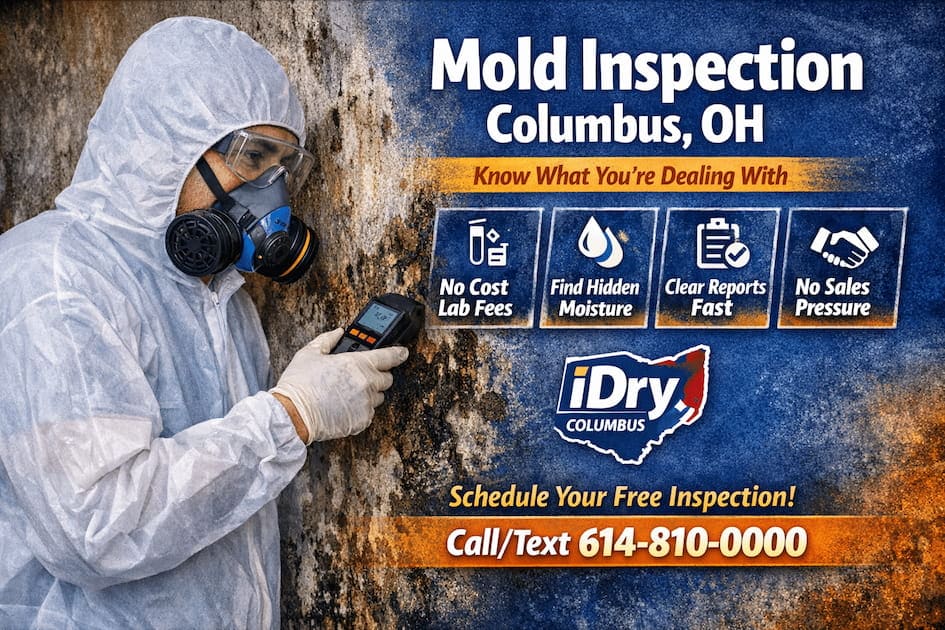
Thermal imaging and moisture meters. No lab fees, no upsell — we identify every affected area and give you a written scope, free.
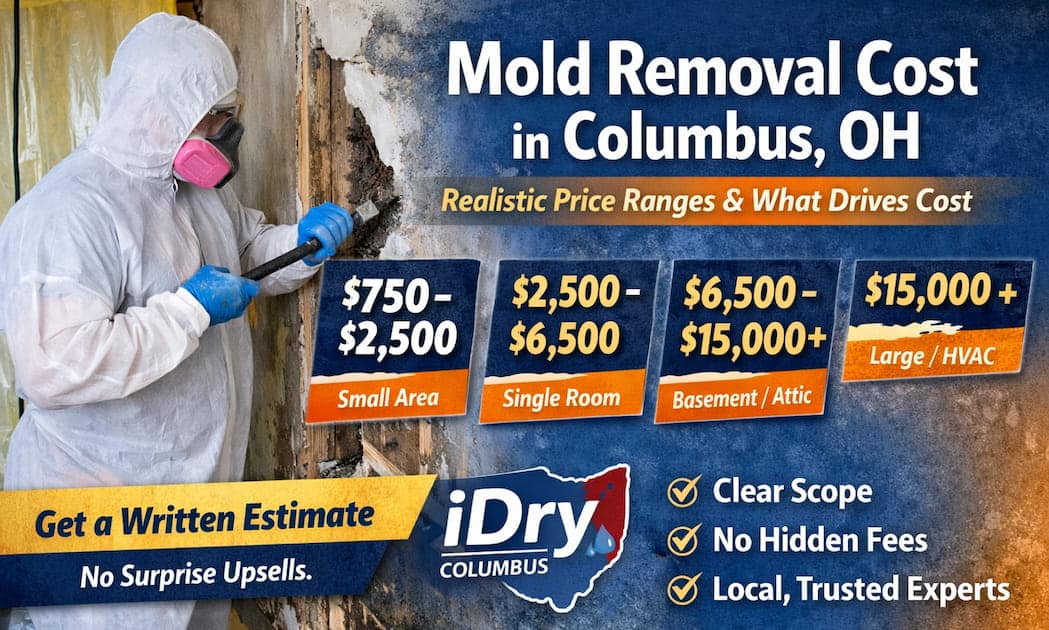
Transparent pricing guide covering all mold remediation scopes — HVAC, basement, attic, crawl space, and whole-structure jobs.
What Columbus Homeowners Say
"We smelled something musty every time the AC turned on. iDry found mold in the air handler housing and the supply plenum. They explained exactly what they were treating and why — and told us upfront we'd also need a duct cleaner for the interior. No surprises. Everything they said would happen, happened."
— D. Miller, Westerville (Homeowner)
"My HVAC tech found mold during a maintenance visit and I was in a panic. Curtis's team came same day, walked me through the scope, and had a written price before they touched anything. The honest breakdown of what they do vs. what duct cleaners do saved me from hiring the wrong company twice."
— R. Hartman, Upper Arlington (Homeowner)
"30 years of experience shows immediately. They found the condensate drain issue that caused the mold — not just the mold itself. Fixing the source and the symptom in the same visit is something I didn't expect from a restoration company. Worth every dollar."
— T. Briggs, Dublin (Homeowner)
30 Years Means We've Seen Every HVAC Mold Scenario
I started iDry Columbus in 1995. In thirty years of Central Ohio restoration work, I've walked through every version of this problem — the homeowner who ran the system for six months after noticing the smell, the HVAC contractor who "treated" the mold with bleach spray and called it done, the insurance adjuster who needed cause documentation to approve coverage.
HVAC mold is one of the scenarios where getting the scope wrong costs homeowners significantly — either because the wrong contractor undertreated and it came back, or because the duct cleaning company overstepped and claimed to remediate mold they didn't have the training or equipment to handle properly.
We do this one piece right. Then we coordinate the rest.
— Curtis Teets, Owner · iDry Columbus
Call 614-810-0000Get a Free HVAC Mold Inspection
Same-day response throughout Franklin County. We come to you, inspect with thermal imaging and moisture meters, and give you a written scope before any work is discussed.
- No lab fees
- No inspection charge
- Written scope before we quote anything
- We coordinate duct cleaning if needed
Or send a message: