
Curtis Teets · 30-year Columbus mold removal expert.
Mold Removal Columbus Ohio — 60 Minutes Out, 30 Years Proven
Columbus properties develop mold patterns that national franchises don't recognize and generic crews don't know how to fix permanently. We do. Thirty years of Central Ohio restoration work — from pre-1960s German Village masonry to Westerville new-builds — backs every job we take on.

Columbus's mold removal team. Serving Clintonville, Upper Arlington, Westerville, Dublin, Worthington, Hilliard, and all of Franklin County for 30 years. All mold types — black mold, basement mold, attic mold, crawl space mold, HVAC mold. Call 614-810-0000 — we respond in 60 minutes.
Signs You Need Mold Removal in Your Columbus Home
Mold doesn't always announce itself. Some Columbus homeowners see it — black patches on drywall, green growth in crawl spaces. Others smell it first — a musty odor that won't go away. Either way, the clock is running. Mold spreads fast in Ohio humidity.
Time for mold to start growing after water intrusion in a Columbus home. The mold window is short. Call 614-810-0000 at the first sign.
Older Columbus neighborhoods — Franklinton, Linden, Milo-Grogan — have higher mold risk. FEMA flood zones, pre-1960 homes, and poor soil drainage create the conditions mold needs. Our Columbus Neighborhood Mold Risk Index ranks all 26 neighborhoods so you can gauge your baseline risk before signs appear.
Dark spots on walls or ceilings are the clearest signal. Black, green, or gray patches near windows, in bathrooms, or along basement walls — not all discoloration is mold mean active mold growth. Don't scrub it with bleach — that spreads spores. Professional mold inspection with thermal imaging identifies every colony, including hidden ones.
A musty smell without visible growth means mold behind walls. Drywall holds moisture for weeks after a leak. Mold grows inside the wall cavity where you can't see it. The smell is mVOCs — toxic gases mold releases as it feeds. Odor removal alone won't fix the source.
Health symptoms that go away when you leave home are a red flag. Congestion, headaches, and breathing problems that clear up at work or on trips point to mold. Columbus doctors see more mold-related complaints in spring and summer.
Any past water event can lead to mold. A burst pipe, flood, or roof leak gives mold what it needs — moisture. If the area wasn't dried within 48 hours, mold is likely growing.
Columbus humidity compounds the problem. Ohio River Valley moisture and clay soil trap water against foundations. Older homes with poor ventilation make it worse. National mold averages don't reflect what Columbus deals with.
Columbus Mold Remediation — Our Process
Six steps. Contained. Documented. No mold leaves the work area.
Our process contains mold, removes it, and prevents regrowth — in that order. This isn't scrubbing surfaces with bleach. Mold hides inside walls, under floors, and in HVAC ductwork. We find every colony and remove it.
Thermal Inspection
We scan with thermal cameras and moisture meters to map every colony. No air sampling. No guesswork. We see exactly where moisture is feeding growth — visible and hidden. Full inspection details here.
HEPA Containment
Plastic barriers and negative air pressure seal the work area. HEPA air scrubbers run through the entire job — capturing spores down to 0.3 microns. No cross-contamination to clean rooms.
Mold Removal
All affected materials — drywall, insulation, wood — cut out and bagged. Surface mold scrubbed with specialized solutions. We don't paint over mold. We remove it completely.
Antimicrobial Treatment
Every exposed surface treated with EPA-registered antimicrobial. This prevents regrowth in the treated area — the most common failure point with budget remediation companies in Columbus.
Structural Drying
Moisture is the root cause — we dry it out completely. Dehumidifiers and air movers bring materials below 60% relative humidity. We verify with daily moisture readings across all treated areas.
Final Inspection
We re-scan with thermal cameras and moisture meters. Every treated area must read below threshold before containment comes down. Full documentation goes to your insurance adjuster.
HEPA filtration captures particles this small — including mold spores. Every iDry containment zone runs continuous HEPA air scrubbing through the entire Columbus job.
Mold Remediation Cost in Columbus Ohio
Cost depends on scope — how much mold, where it is, and what's affected. Most Columbus mold jobs fall into one of three ranges. Insurance coverage depends on the water source that caused the mold. Call 614-810-0000 for a free assessment.
Small Job
$500–$1,500+
Single area, surface mold only. Bathroom, window frame, or small wall section. Containment and removal done in one day. Most common for newer Columbus homes.
Moderate Job
$1,500–$5,000+
Multiple areas or inside-wall mold. Drywall removal, full HEPA containment, antimicrobial treatment. 2–3 day timeline. Common in Clintonville and Upper Arlington basements.
Large Job
$5,000–$15,000+
Structural mold — basement-wide, crawl space, or attic. Full material removal, extended containment, structural drying. Insurance may cover when caused by sudden water event.
Ohio homeowners insurance typically covers mold removal when mold was caused by a covered water event — burst pipes, flooding, storm damage. Maintenance-related mold is usually excluded.
Ohio HO-3 policies cover mold from sudden water events. A burst pipe, storm damage, or sewage backup that causes mold is typically covered. Gradual moisture problems are excluded. iDry documents every job for your adjuster from day one. See our full insurance guide.
Waiting multiplies cost. A $1,500 surface mold job becomes a $10,000 structural remediation if mold penetrates framing. See our detailed cost breakdown for all mold types and scenarios.
Where We Find Mold in Columbus Properties
Mold follows moisture. These are the most common locations in Central Ohio homes — and what we look for during every inspection.
Columbus clay soil traps moisture against foundation walls. Water seepage, condensation, and poor ventilation create growth conditions year-round. Basement mold is the most common job we handle.
Standing water, failed vapor barriers, and ventilation gaps. Crawl space mold affects floor framing and can spread through HVAC ductwork into living areas above.
Poor ventilation traps warm moist air against cold roof sheathing. Attic mold is often discovered during home sales — and kills deals fast. Westerville and Dublin homes are common.
Grout failure, exhaust fan problems, and behind-tile moisture. Bathroom mold grows between tiles and inside walls where water seeps for months before anyone notices.
Mold inside ductwork circulates spores through every room. Drain pan overflow and condensation lines are common growth points. HVAC mold affects indoor air quality across the entire home.
Slow leaks from plumbing or roof create hidden colonies. You smell it before you see it. Thermal imaging is the only way to find it without opening walls. Common after water and mold events.
Why Columbus Homes Are Prone to Mold
High humidity, old homes, and clay soil make Columbus a mold hot spot. The patterns here are local — and we've seen them all in 30 years.
1920s–40s homes with stone foundations and unfinished basements. Moisture wicks through masonry year-round. Basement mold is endemic in Clintonville properties — almost every job we do here involves the foundation.
Historic brick with limited vapor barriers. Below-grade living spaces trap humidity. Heritage compliance limits what you can change — we know the rules and work within them.
1950s–70s colonials with finished basements. Drywall over concrete creates hidden mold environments. Crawl spaces under additions are frequently affected in Upper Arlington.
1970s–90s split-levels with bathroom exhaust venting into attics. Attic mold discovered during home inspections is common in Westerville. Spring humidity makes it worse every year.
1980s–2000s builds with aggressive landscaping. Water directed toward foundations creates basement moisture. Waterproofing failures lead to growth conditions in Dublin properties.
2000s+ newer builds with HVAC duct condensation issues. Poorly sealed crawl spaces are the main mold source. Less structural risk but persistent humidity problems in New Albany.
Real Mold Remediation Reviews
From Columbus homeowners who've dealt with mold, water damage, and restoration.
iDry Columbus went above and beyond for my family when we had a water emergency. They responded quickly, communicated clearly through the whole process, and left our home in great shape. Curtis and the team treated us like family — not just another job.
The way Curtis and his crew handled our situation was old school in the best way — honest, respectful, and thorough. They cleaned out years of buildup without judgment and left the property ready for renovation. Communication was clear from start to finish.
We had a mold problem in our basement that two other companies failed to fix properly. iDry came in, identified the source of moisture, and remediated everything correctly. The musty smell is completely gone and the basement is dry. Professional, on time, and fair pricing.
Mold Removal Resources
Detailed guides for all mold types — where it grows, what it costs, and when to call iDry.
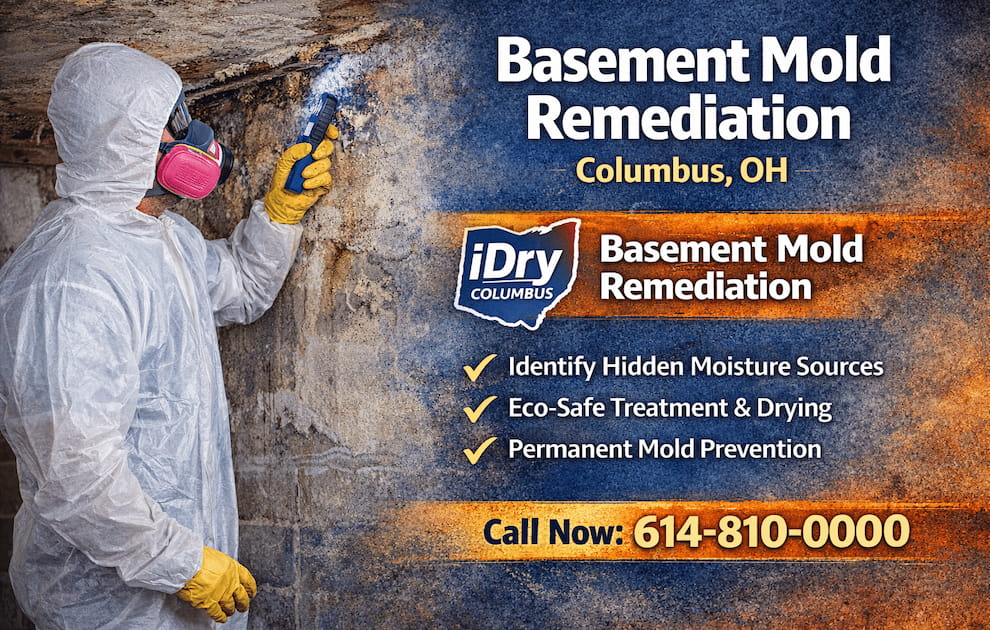
Basement Mold Is Columbus's #1 Call
Columbus clay soil traps moisture against foundations. How basement mold starts, what it costs, and the removal process.

Black Mold Found? Here's What Happens Next
Stachybotrys identification, health risks, professional removal with HEPA containment. What to expect from start to finish.

What Mold Removal Actually Costs — Real Numbers
Small, moderate, and large job ranges. Insurance coverage. What drives the final bill and how to reduce it.
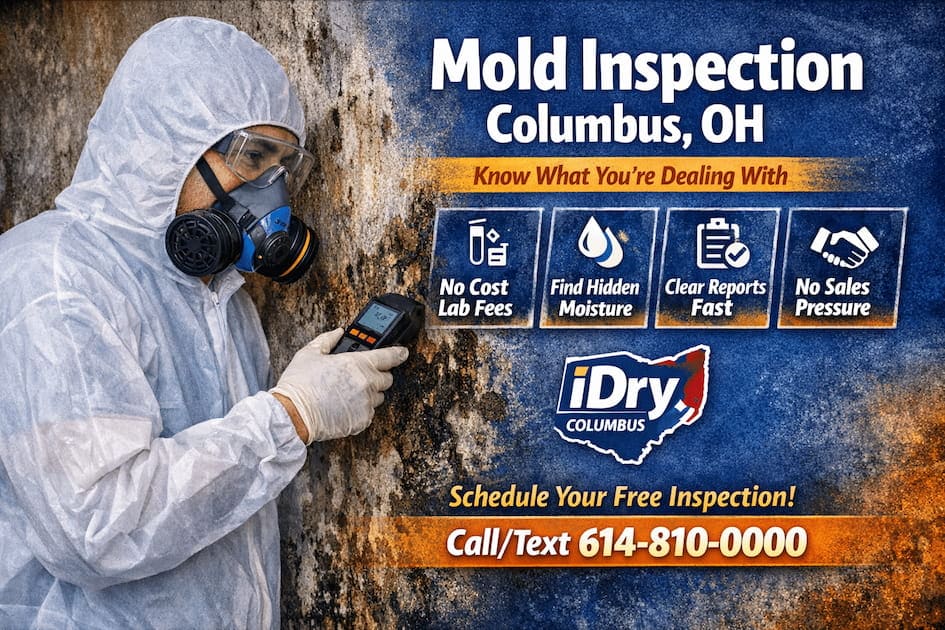
How We Find Mold You Can't See
Thermal imaging, moisture meters, and a trained eye. How professional mold inspection works and what it reveals.
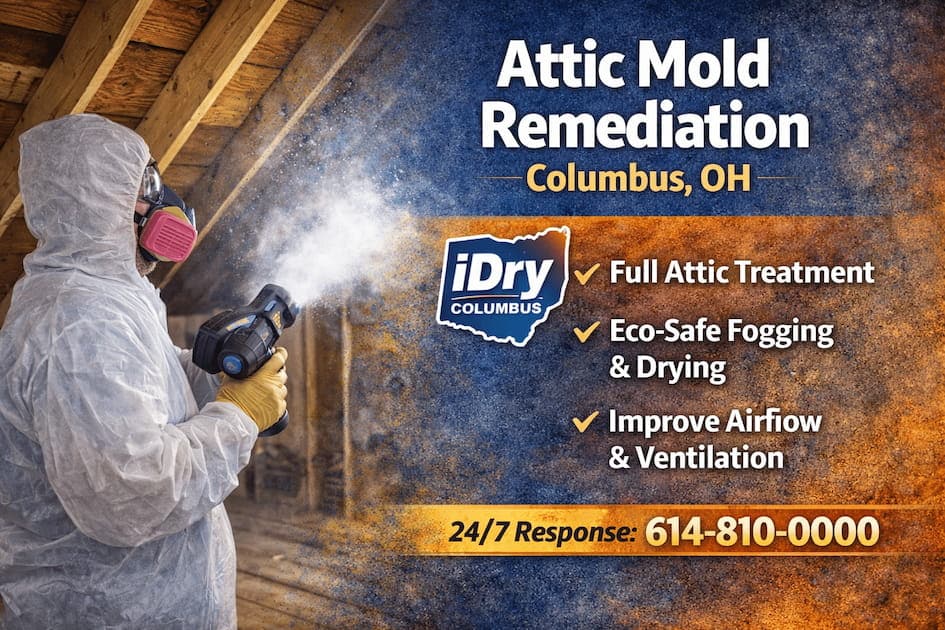
Attic Mold Kills Home Sales — Fix It First
Poor ventilation, roof sheathing mold, and real estate impact. How to handle attic mold before listing or after discovery.
Mold Removal FAQs
Common questions about mold remediation, costs, and prevention in Columbus.
How much does mold remediation cost in Columbus Ohio?
Columbus mold removal ranges from $500–$1,500 for small single-area jobs to $5,000–$15,000+ for large structural projects. Final cost depends on mold location, affected materials, and total square footage. Insurance covers mold from sudden water events like burst pipes or flooding. Call iDry at 614-810-0000 for a free assessment.
What is the difference between mold removal and mold remediation?
Mold removal means physically removing mold colonies from surfaces and materials. Mold remediation is the full process — containment, removal, antimicrobial treatment, drying, and prevention. iDry Columbus does complete remediation, not surface cleaning. Proper containment and HEPA filtration prevent spores from spreading to clean areas during the job.
Is mold remediation worth the cost for Columbus homeowners?
Yes — untreated mold spreads fast in Columbus humidity and damages structure, drops property values, and creates health risks. A $2,000 remediation now prevents a $15,000 structural repair later. Ohio home sales require disclosure of known mold. Call 614-810-0000 for a free inspection to see exactly what you're dealing with.
How long does professional mold removal take in Columbus?
Small jobs take 1–2 days. Moderate jobs with drywall removal take 2–3 days. Large structural projects — full basement, crawl space, or attic — take 3–5 days including containment setup and final verification. iDry Columbus provides daily progress updates and moisture readings throughout every job.
Does homeowners insurance cover mold removal in Ohio?
Ohio HO-3 policies typically cover mold when caused by a sudden covered event — burst pipe, storm damage, sewage backup. Gradual moisture or maintenance-related mold is usually excluded. iDry Columbus documents every job for your adjuster from day one. See our full insurance guide for details.
Can I stay in my home during mold remediation?
Most Columbus homeowners stay home during remediation. HEPA containment barriers isolate the work area from living spaces. If mold covers more than 100 square feet or involves HVAC contamination, iDry may recommend temporary relocation. We walk you through every option before work begins.
How do I know if I have mold in my Columbus home?
Look for dark patches on walls, ceilings, or around windows. A persistent musty smell — even without visible growth — signals hidden mold behind drywall or under floors. Health symptoms like congestion that improve when you leave home are another sign. Call 614-810-0000 for a free thermal imaging inspection.
What happens if mold is found during a home inspection in Ohio?
Ohio requires sellers to disclose known material defects including mold. Buyers typically request remediation before closing or negotiate a price reduction. iDry Columbus provides pre-sale mold removal with documentation that satisfies buyer and lender requirements. Fast turnaround protects your closing timeline.
How quickly does mold grow after water damage?
Mold begins growing within 24–48 hours after water intrusion in Columbus homes. Ohio humidity speeds it up. By 72 hours, visible colonies form on drywall, wood, and carpet. Fast water extraction and structural drying are the only reliable prevention. Call 614-810-0000 after any water event.
What types of mold are common in Columbus Ohio basements?
Cladosporium, Aspergillus, and Penicillium are the most common basement mold types in Columbus. Stachybotrys — black mold — appears where water has been standing for extended periods. All types require professional containment and removal. iDry handles every mold type found in Central Ohio properties.
Get a Free Mold Inspection
Tell us what you see or smell — we'll inspect with thermal imaging and moisture meters. Columbus dispatch in 60 minutes. Available 24/7.
Mold Removal Service Area
iDry responds 24/7 across Franklin County and surrounding areas. 60-minute dispatch from our Columbus headquarters. All mold types. We also serve Columbus for water damage restoration and odor removal.